






What's Happening?
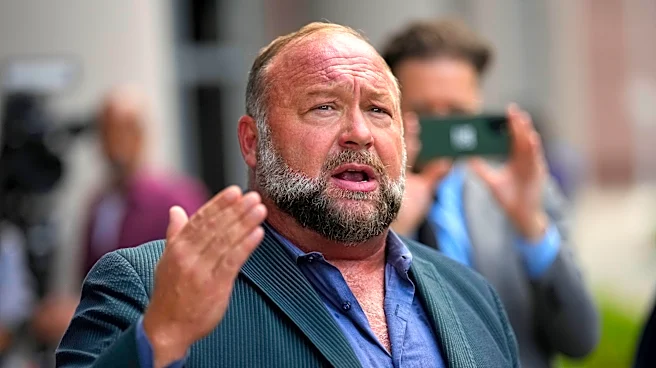
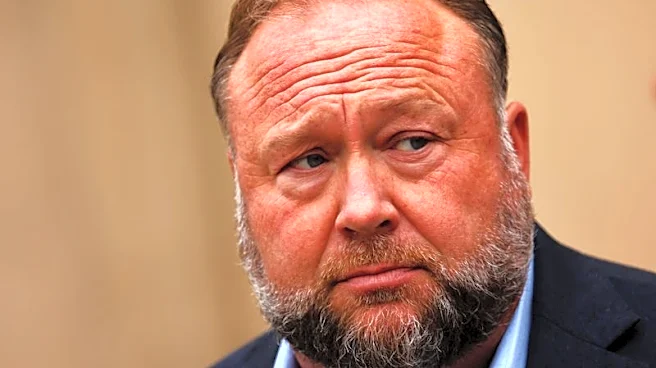
A Texas court has significantly reduced the $50 million judgment against Infowars founder Alex Jones to $1.5 million. This decision stems from a lawsuit filed by Sandy Hook parents Neil Heslin and Scarlett Lewis, who sued Jones for falsely claiming the 2012
Sandy Hook Elementary School shooting was a hoax. The Texas Third Court of Appeals unanimously ruled that the parents did not present sufficient evidence to exceed the state's $750,000 cap on damages. This ruling marks a partial legal victory for Jones, though it does not impact a separate $1.4 billion judgment against him in Connecticut. Jones and his company, Free Speech Systems, are currently undergoing bankruptcy proceedings.
Why It's Important?
This reduction in the judgment against Alex Jones in Texas is significant for several reasons. Firstly, it highlights the complexities and limitations of state laws regarding damage caps in defamation cases, even in instances of extreme harm. While the initial $50 million verdict was seen as a strong message against the spread of misinformation, the appellate court's decision demonstrates that legal frameworks can constrain the final financial penalties. Secondly, it provides a contrasting outcome to the Connecticut judgment, illustrating the varying legal landscapes across states for similar offenses. This could influence future legal strategies for both plaintiffs and defendants in high-profile defamation cases. For the victims' families, while still a substantial sum, the reduction may be perceived as a setback in their pursuit of full accountability for the emotional and psychological distress caused by Jones's false claims.
What's Next?
The legal proceedings for Alex Jones and Free Speech Systems are ongoing, particularly with the bankruptcy filings. The Texas ruling may influence how these bankruptcy cases proceed, potentially affecting the total amount of compensation available to all victims across different lawsuits. It is likely that the Sandy Hook parents in Texas will consider their options, which could include further appeals or focusing on the enforcement of the remaining judgment. Meanwhile, the $1.4 billion judgment in Connecticut remains unaffected, and efforts to collect that sum will continue. This case will likely continue to be a precedent-setting example in discussions about free speech, defamation, and accountability for misinformation, potentially leading to legislative discussions about damage caps in similar cases.
Beyond the Headlines
The Alex Jones case transcends a simple legal dispute; it delves into profound questions about the responsibilities of media figures, the impact of misinformation in the digital age, and the balance between free speech and the protection of individuals from malicious falsehoods. The varying outcomes in Texas and Connecticut underscore the fragmented legal landscape in the U.S. concerning these issues. This case has brought national attention to the suffering of victims of mass tragedies who are further traumatized by conspiracy theories. It also highlights the challenges of holding individuals accountable for online speech, especially when it incites harassment and emotional distress. The ongoing legal battles could contribute to a broader societal re-evaluation of how to combat disinformation effectively while upholding constitutional rights, potentially influencing future legislation or judicial interpretations regarding online content and its consequences.