







What's Happening?
The Israeli government has approved a new long-term plan by the Water Authority to allow private entities to plan and develop large desalination plants. This initiative aims to produce 2.3 billion cubic meters of desalinated water annually by 2050, increasing
to 2.75 billion cubic meters by 2075. The decision is a proactive measure to address the anticipated rise in Israel's population, urbanization, and the impacts of climate change, which are expected to increase pressure on water supply and consumption. Currently, the process of planning and constructing a desalination plant in Israel can take up to eight years. To expedite this, the government will now authorize private companies to build plants with a minimum production capacity of 100 million cubic meters of water per year. Private entities must obtain approval from the Water Authority and the Energy and Infrastructure Minister, along with a recommendation from Israel's Planning Administration.
Why It's Important?
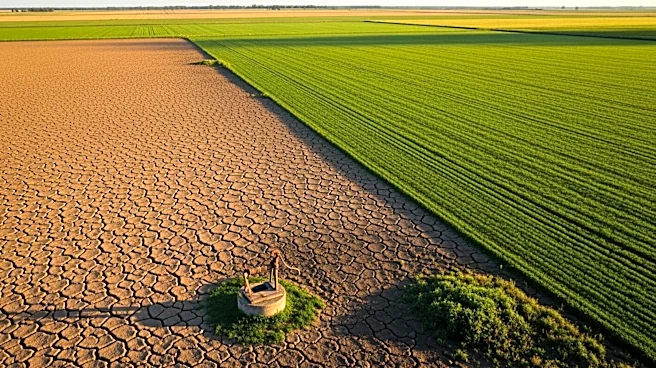
This development is significant as it addresses the critical issue of water scarcity in Israel, a country that faces challenges due to its arid climate and growing population. By involving private companies, the government aims to accelerate the construction of desalination plants, ensuring a sustainable water supply for future generations. This move could serve as a model for other nations facing similar challenges, highlighting the role of public-private partnerships in addressing environmental and infrastructural issues. The plan also reflects a strategic approach to mitigate the effects of climate change, which is expected to exacerbate water shortages globally.
What's Next?
The next steps involve private companies seeking approval to participate in the program, which includes meeting specific conditions set by a team of representatives from various governmental bodies. As these projects progress, there will likely be increased scrutiny on the environmental impact and efficiency of the desalination plants. The success of this initiative could influence future policies and investments in water infrastructure, both in Israel and internationally. Stakeholders, including environmental groups and local communities, may also play a role in shaping the implementation of these projects.