


What's Happening?
Republican Senator Thom Tillis from North Carolina has publicly criticized President Trump's decision to appoint Jared Kushner and Steve Witkoff to lead significant foreign policy negotiations. Tillis expressed his concerns during an interview with ABC
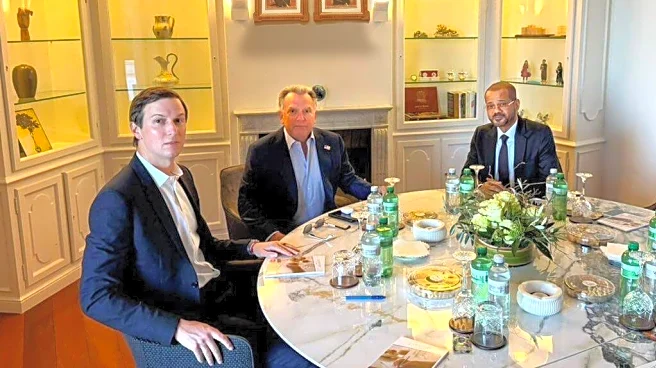
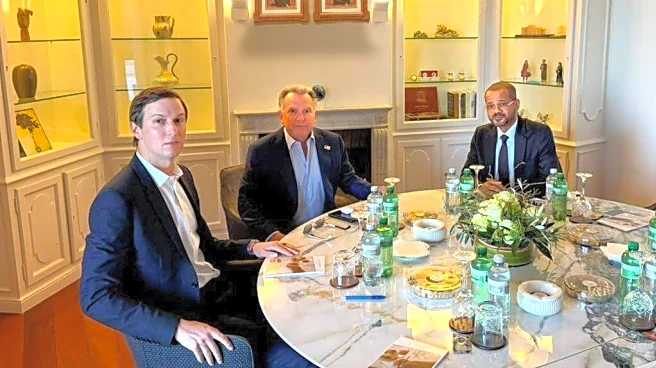
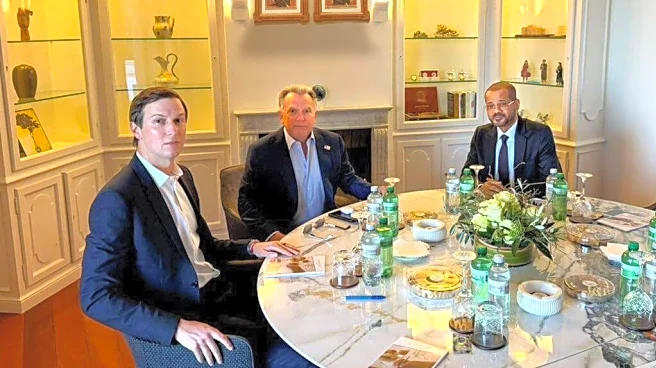
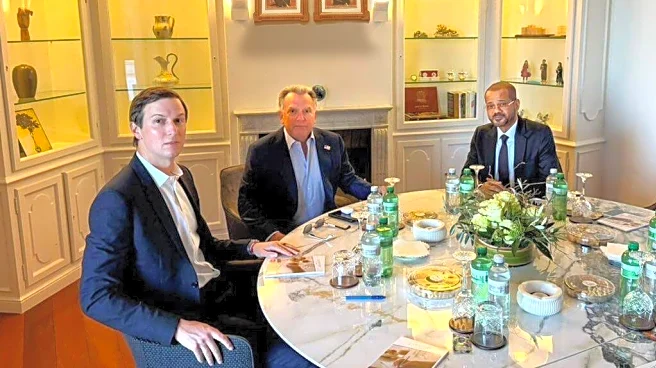
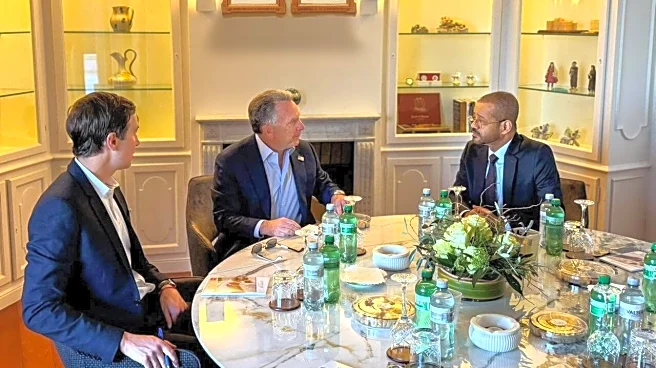
News, questioning the qualifications of Kushner, Trump's son-in-law, and Witkoff, a billionaire real estate mogul, for handling complex international issues such as peace negotiations in Ukraine, Iran, and Gaza. Tillis highlighted the lack of Senate confirmation and oversight for these appointments, suggesting that more experienced individuals should be involved in these high-stakes discussions. The criticism comes as Kushner and Witkoff are actively engaged in negotiations with Iran, meeting with Omani Foreign Minister Badr Albusaidi in Geneva to discuss Iran's nuclear weapons program.
Why It's Important?
The appointment of Kushner and Witkoff to key foreign policy roles raises significant concerns about the qualifications and oversight of individuals handling critical international negotiations. This situation underscores the broader issue of political appointments based on personal connections rather than expertise, which could impact the effectiveness and credibility of U.S. foreign policy. The criticism from Senator Tillis, a member of the president's party, highlights internal dissent and the potential for political fallout. The involvement of individuals without formal foreign policy experience in sensitive negotiations could have far-reaching implications for U.S. relations with other countries and the success of diplomatic efforts.
What's Next?
As Kushner and Witkoff continue their negotiations, it remains to be seen how their efforts will be received by the international community and whether they will achieve the desired outcomes. The ongoing ethics investigation into Witkoff's business dealings could further complicate matters, potentially leading to increased scrutiny and pressure for more transparent and accountable foreign policy appointments. The response from other political leaders and stakeholders will be crucial in shaping the future of these negotiations and the broader approach to U.S. foreign policy under President Trump's administration.