







What's Happening?
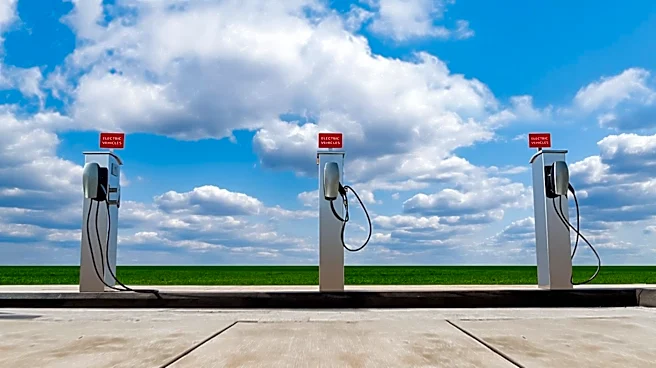
Various U.S. federal, state, and local initiatives are actively working to expand electric vehicle (EV) charging infrastructure, with a significant focus on ensuring equitable access. The Biden-Harris Administration has announced $623 million in grants
to broaden the national EV charging network. Federal programs, including those from the FHWA and USDOT, provide funding and guidance for infrastructure development. States like Oregon are implementing programs, such as the Community Charging Rebates Program, to extend EV charging access to underserved and rural communities. Planning documents from various regions, including the Bay Area and Tahoe-Truckee, outline strategies for increased plug-in electric vehicle adoption and infrastructure needs. Research studies are also examining disparities in EV charging availability and affordability across different racial and income groups in California, highlighting the importance of social equity in deployment.
Why It's Important?
The concerted effort to expand and equitably distribute EV charging infrastructure is crucial for the widespread adoption of electric vehicles in the U.S. A robust and accessible charging network addresses range anxiety, a major barrier for potential EV buyers, and ensures that all communities, including disadvantaged ones, can benefit from cleaner transportation. This is vital for achieving national environmental goals, reducing carbon emissions, and improving public health. Furthermore, equitable deployment prevents the creation of 'charging deserts' and ensures that the economic and environmental benefits of EVs are shared broadly, fostering social justice. The focus on planning and research helps identify and mitigate potential inequities, ensuring that the transition to electric mobility is inclusive and effective.
What's Next?
The ongoing implementation of federal grants and state-level programs will continue to drive the expansion of EV charging infrastructure. Future efforts will likely involve more detailed planning at the local level, with toolkits and readiness plans being developed to help communities prepare for increased EV adoption. Research will continue to inform policy, particularly regarding equitable access, with studies analyzing how clean energy policies influence equity in EV charging deployment. There will also be a focus on addressing specific challenges, such as providing charging solutions for multi-unit dwellings and optimizing charger placement using transportation data. The goal is to create a seamless and accessible charging experience for all EV owners, regardless of their location or socioeconomic status.
Beyond the Headlines
The push for equitable EV charging infrastructure goes beyond simply installing more chargers; it touches upon fundamental issues of urban planning, social equity, and technological integration. Ensuring equitable access means addressing historical disparities in infrastructure development and preventing new ones from emerging in the context of green technology. This involves not only physical infrastructure but also policy frameworks that support affordability and accessibility for diverse populations. The data and research being conducted on charging disparities highlight the need for a holistic approach that considers socioeconomic factors alongside technological advancements. Ultimately, the success of EV adoption hinges on creating an inclusive ecosystem where electric mobility is a viable option for everyone, contributing to a more just and sustainable society.