








What's Happening?
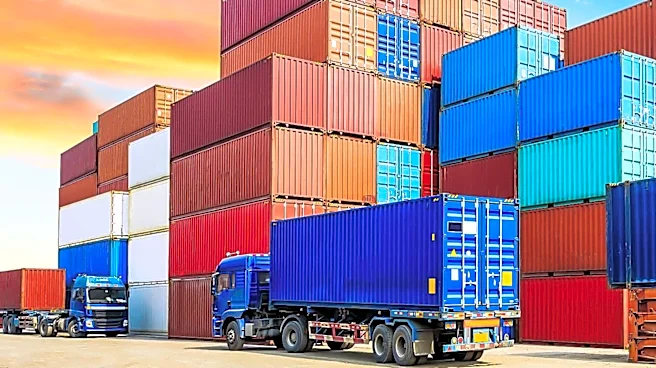
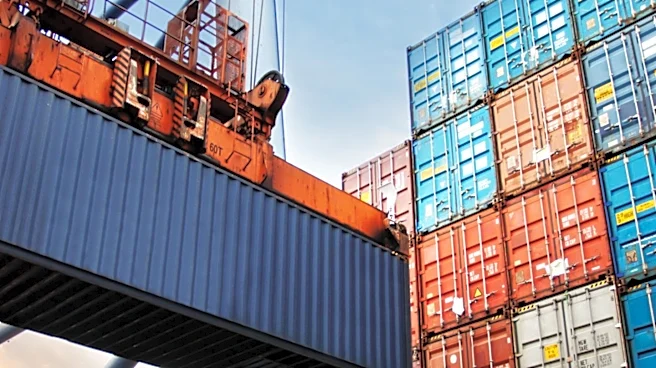
The Port of Antwerp-Bruges experienced a 2.4% decline in goods throughput in the first half of 2026, handling 133.9 million tons of maritime goods. The decrease was primarily due to a drop in container handling, exacerbated by geopolitical tensions and operational
disruptions. Container throughput fell by 1.5% in TEU and 0.6% in tons compared to the previous year. The port faced challenges such as a four-day strike, an oil spill, and pilot actions, which contributed to the decline. Despite these setbacks, the port maintained its market share and continued investing in infrastructure and sustainable growth.
Why It's Important?
The decline in goods throughput at the Port of Antwerp-Bruges highlights the impact of geopolitical tensions and operational disruptions on global trade. As a major European port, changes in its throughput can have significant implications for supply chains and economic activities across the region. The port's efforts to maintain market share and invest in infrastructure demonstrate resilience and a commitment to long-term growth. However, the challenges faced by the port reflect broader issues in the global shipping industry, including labor disputes and environmental incidents, which can disrupt trade flows and economic stability.
What's Next?
The Port of Antwerp-Bruges will likely focus on addressing the operational challenges that contributed to the decline in throughput. This may involve enhancing labor relations, improving environmental response strategies, and optimizing logistics to prevent future disruptions. The port's continued investment in infrastructure and capacity expansion will be crucial in maintaining its competitive position. Additionally, geopolitical developments, particularly in the Middle East, will continue to influence trade patterns and energy flows, requiring the port to adapt to changing market conditions.