







What's Happening?
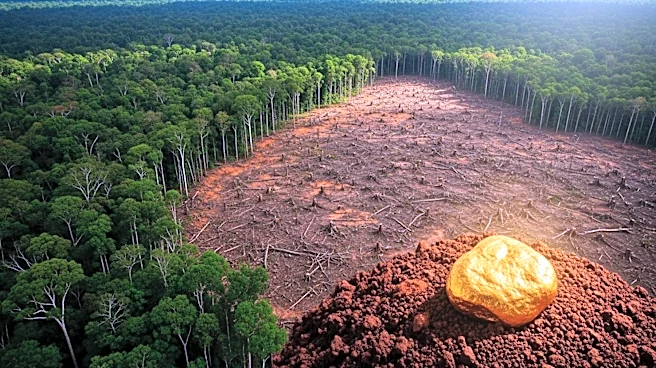
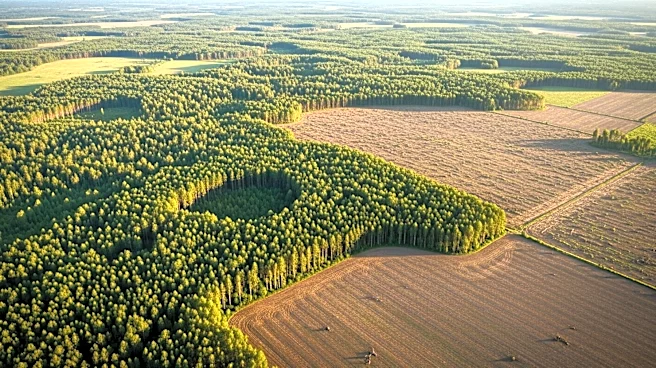
In 2025, global forest loss decreased by 36% compared to the previous year, yet the world still lost 10.6 million acres of rainforest, according to data from the University of Maryland and the World Resources Institute's Global Forest Watch. Despite this
reduction, forest loss remains significantly high, driven primarily by agricultural expansion, including cattle ranching and soy cultivation in Brazil and Bolivia, and other crops in Peru and Laos. The COP26 climate summit in 2021 saw over 100 countries pledge to halt and reverse forest loss by 2030, but current rates are still 70% too high to meet this goal. The report highlights that fires, exacerbated by climate change, continue to pose a significant threat to forests, particularly in the tropics.
Why It's Important?
The continued high rate of forest loss has significant implications for global biodiversity and climate change mitigation efforts. Forests act as crucial carbon sinks, and their destruction contributes to increased carbon emissions, exacerbating climate change. The agricultural sector, a major driver of deforestation, faces pressure to adopt more sustainable practices to align with global environmental goals. The data underscores the challenges in balancing economic development with environmental conservation, particularly in regions where agriculture is a key economic driver. The findings also highlight the need for stronger international cooperation and policy enforcement to achieve the 2030 deforestation targets.
What's Next?
Countries are expected to intensify efforts to curb deforestation through policy measures and international cooperation. Brazil, for instance, has already implemented stronger environmental policies under President Luiz Inácio Lula da Silva, resulting in a 42% reduction in primary forest loss. Continued monitoring and enforcement of anti-deforestation policies will be crucial. Additionally, addressing the root causes of deforestation, such as agricultural demand and poverty, will be essential for long-term success. The international community may also increase support for sustainable agricultural practices and reforestation initiatives.