




What's Happening?
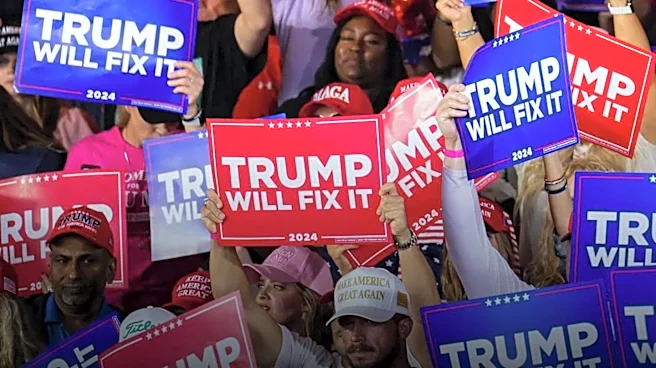
The National Republican Congressional Committee (NRCC) has included four Florida Republican candidates in its 'MAGA Majority' program. This initiative aims to support candidates who can help Republicans expand their majority in Congress. The selected
candidates are Casey Askar, Mike Beltran, Dan Green, and Scott Singer, all of whom recently won their Republican Primary elections. These candidates are challenging incumbent Democratic members of Congress in districts that have been redrawn, with a majority of voters in these new districts having supported President Trump in the 2024 Presidential Election. Specifically, Mike Beltran is challenging U.S. Rep. Kathy Castor in Florida’s 14th Congressional District, Dan Green is facing U.S. Rep. Darren Soto in Florida’s 9th Congressional District, and Scott Singer is challenging U.S. Rep. Jared Moskowitz in Florida’s 25th Congressional District. Casey Askar is running in Florida’s 22nd Congressional District, an open seat where no incumbent chose to run under the new map, against Democrat Pia Dandiya. The NRCC emphasizes that these candidates are committed to President Trump's 'America First' agenda, focusing on issues such as border security, lowering costs, and reducing taxes.
Why It's Important?
This move by the NRCC highlights the Republican Party's strategic focus on leveraging newly redrawn congressional districts in Florida to gain seats in the U.S. House of Representatives. The 'MAGA Majority' program signifies a concerted effort to channel donor support and resources to these specific races, indicating their perceived competitiveness and importance to the party's national agenda. The targeting of long-serving Democratic incumbents like Kathy Castor, who has served for nearly 20 years, underscores the Republican belief that these districts are now winnable due. The outcome of these races could significantly impact the balance of power in the House, potentially strengthening the Republican majority or narrowing it, depending on the success of these challenges. The emphasis on President Trump's 'America First' agenda also suggests that these elections will be framed around national conservative priorities, influencing the political discourse and policy debates in Washington.
What's Next?
The inclusion of these candidates in the 'MAGA Majority' program means they will receive increased financial and strategic support from the NRCC as the general election approaches. This will likely intensify the campaigns in Florida's 9th, 14th, 22nd, and 25th Congressional Districts, leading to more aggressive campaigning, advertising, and voter outreach efforts from both Republican and Democratic sides. The Democratic Congressional Campaign Committee (DCCC) is expected to counter these efforts, particularly in districts where incumbents are being challenged. The focus will be on voter turnout and the ability of each campaign to mobilize its base. The redrawn district lines will be a critical factor, as both parties will be working to persuade voters in areas that may have shifted in their political leanings. The results of these elections will serve as a key indicator of the broader political landscape and the effectiveness of redistricting efforts in shaping congressional representation.
Beyond the Headlines
The strategic use of redistricting, often referred to as 'gerrymandering,' by the Republican Party in Florida reflects a broader national trend where both major parties attempt to draw district lines to their advantage. While the NRCC views these redrawn maps as opportunities to expand their majority, the effectiveness of such efforts is not always guaranteed, as indicated by some internal party strategists who suggest the net gain might be less than initially hoped. This dynamic raises questions about the fairness and democratic integrity of electoral processes, as district boundaries can significantly influence election outcomes regardless of overall voter sentiment. The intense focus on these specific Florida races also highlights the increasing polarization of U.S. politics, where even long-held seats can become highly contested due to demographic shifts and partisan redistricting. The long-term implications could include a further entrenchment of partisan control in certain areas and a reduction in competitive elections, potentially leading to less representative governance.