






What's Happening?
Cleon Williams, known as 'Uncle Lou' of Uncle Lou's Entertainment Hall in Orlando, has decided to voluntarily leave the United States after an immigration judge ordered his removal. Williams, who has been a significant figure in Orlando's indie music
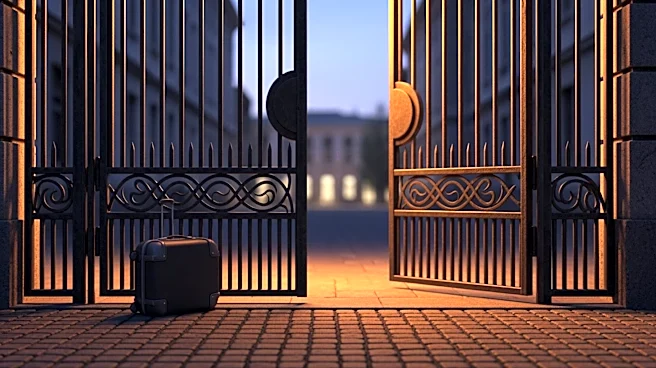
scene, was arrested on May 9 by undercover agents from the Florida Division of Alcoholic Beverages and Tobacco during an investigation into illegal liquor sales at his venue. He was charged with a second-degree misdemeanor, which typically does not result in arrest, but was detained by the Orlando Police Department and held on an Immigration and Customs Enforcement (ICE) detainer. Despite efforts to secure his release, a federal judge denied his bid, and he remained in ICE custody. Williams, who entered the U.S. in 1987 on a temporary worker's visa that has since expired, has chosen to 'self-deport' to Jamaica, a decision that allows for a potential return to the U.S. in the future.
Why It's Important?
Williams' case highlights ongoing debates around immigration enforcement and the treatment of long-term residents who face deportation due to expired visas. His situation has drawn significant attention from the Orlando community and local lawmakers, who have advocated for his release. The case underscores the complexities and human impact of immigration policies, particularly for individuals who have established deep roots in their communities. The support Williams received, including over $60,000 raised for his legal expenses, reflects the community's solidarity and the broader societal implications of immigration enforcement actions. This incident may influence public discourse on immigration reform and the need for policies that consider the contributions and circumstances of long-term residents.
What's Next?
Williams' departure marks the end of his legal battle to remain in the U.S., but his case may continue to resonate in discussions about immigration policy. The funds raised for his legal defense will now assist with his resettlement in Jamaica. The ongoing misdemeanor case in Orange County court remains unresolved, and it is unclear what specific actions led to the targeting of his venue. The Orlando community, having rallied around Williams, may continue to advocate for changes in immigration policy that could prevent similar situations in the future. Williams' supporters hope for his eventual return to the U.S. when circumstances allow.
Beyond the Headlines
The decision to self-deport rather than face forced removal is significant, as it may facilitate Williams' ability to return to the U.S. in the future. This case also raises questions about the role of local law enforcement in immigration matters and the impact of ICE detainers on community relations. The cultural and economic contributions of immigrants like Williams to local communities are often overlooked in policy discussions, and his case may serve as a catalyst for broader conversations about the value of inclusivity and diversity in American society.