






What's Happening?
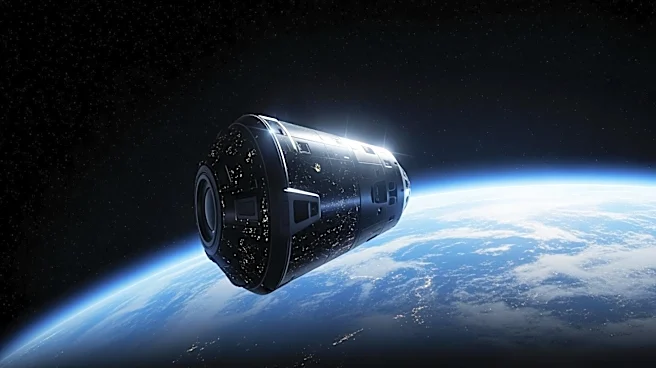
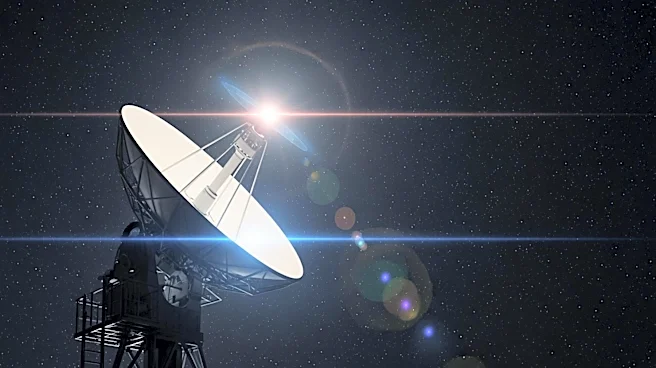
NASA's Artemis II mission, which launched from Kennedy Space Flight Center on April 1, 2026, is utilizing the Deep Space Network (DSN) for communication. The DSN, managed by NASA's Jet Propulsion Laboratory (JPL) in Southern California, consists of complexes
in Goldstone, California; Madrid, Spain; and Canberra, Australia. These complexes are equipped with radio frequency antennas that facilitate communication with various spacecraft, including the crewed Artemis II mission. The DSN is part of NASA's Space Communications and Navigation program, which is crucial for tracking, sending commands, and receiving data from spacecraft exploring the solar system.
Why It's Important?
The use of the DSN for the Artemis II mission underscores the importance of robust communication systems in space exploration. The DSN's ability to maintain contact with spacecraft over vast distances is critical for mission success, ensuring that data and commands can be exchanged efficiently. This capability is vital for the safety of the crew and the success of the mission, as it allows for real-time monitoring and adjustments. The Artemis II mission is a significant step in NASA's efforts to return humans to the Moon, and the DSN's role highlights the technological advancements necessary for deep space exploration.
What's Next?
As the Artemis II mission progresses, the DSN will continue to play a crucial role in maintaining communication with the spacecraft. The mission's success will depend on the seamless operation of the DSN, as it supports the crew's journey and the collection of scientific data. Future missions will likely build on the experiences and lessons learned from Artemis II, further enhancing NASA's capabilities in deep space communication and exploration.