



What's Happening?
In late January 2026, NATO jets intercepted a Russian Su-30SM2 fighter jet near NATO airspace over the Baltic Sea. This interception was part of the NATO Baltic Air Policing mission, which aims to secure the airspace of NATO member countries in the region.
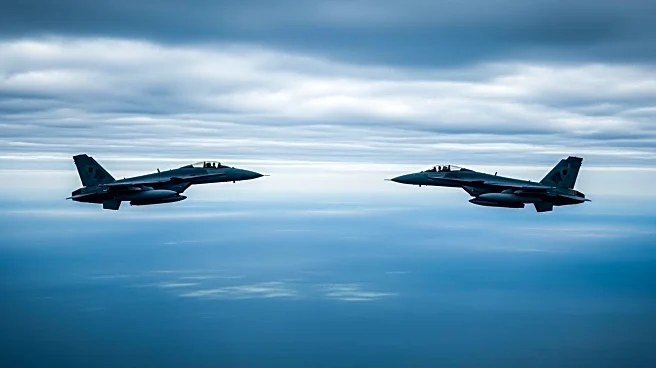
The Spanish Ministry of Defense reported that Spanish EF-18M Hornet jets were involved in the interception. This incident underscores the ongoing military tensions between NATO and Russia, as NATO continues to monitor and respond to Russian military activities near its borders. The interception is seen as part of Russia's broader strategy to destabilize Europe and challenge NATO's cohesion.
Why It's Important?
The interception of the Russian fighter jet by NATO forces is significant as it reflects the persistent military tensions between Russia and NATO. Such incidents can escalate into larger conflicts if not managed carefully. For NATO, maintaining the security of its airspace is crucial to ensuring the safety of its member states and deterring potential aggression. This event also highlights the strategic importance of the Baltic region, where NATO has been increasing its military presence in response to perceived threats from Russia. The ongoing military activities in the area could impact diplomatic relations and lead to increased military spending by NATO countries to bolster their defenses.
What's Next?
Following this interception, NATO is likely to continue its air policing missions and may increase its military presence in the Baltic region to deter further Russian incursions. This could involve more frequent patrols and the deployment of additional military assets. NATO member states may also engage in diplomatic efforts to address the tensions with Russia and seek to prevent further escalations. Additionally, Russia's actions may prompt discussions within NATO about strengthening collective defense measures and enhancing cooperation among member states to address security challenges in the region.