






What's Happening?
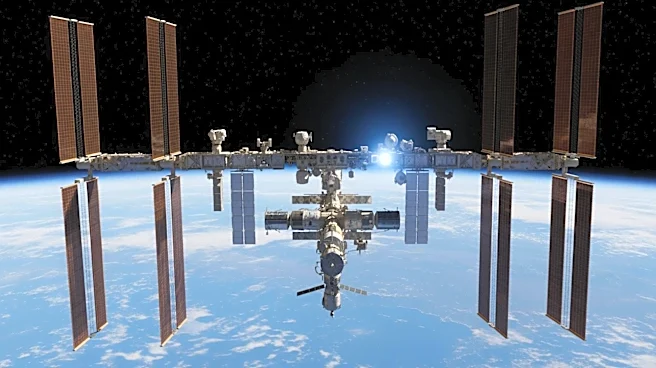
The crew aboard the International Space Station (ISS) has initiated a series of experiments aimed at advancing health and promoting self-sustainable space missions. The Expedition 74 team, including members from NASA, ESA, and Roscosmos, is engaged in bioprinting
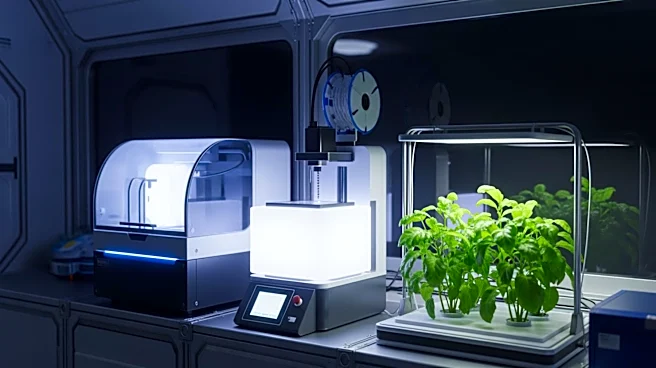
human cartilage tissue and harvesting alfalfa plants. These activities are part of ongoing research to understand the effects of space on biology and physics. The bioprinting experiment involves creating viable cartilage tissues in microgravity, which could lead to on-demand implants using a patient's own cells. Concurrently, the team is conducting plant growth experiments to develop methods for sustainable food production in space. Additionally, the crew is retrieving materials exposed to the space environment to test their durability, which is crucial for developing robust technologies for space and Earth applications.
Why It's Important?
These experiments are significant for several reasons. The ability to bioprint human tissues in space could revolutionize medical treatments for astronauts, reducing the need for Earth-based medical interventions. This capability is crucial for long-duration missions, such as those to Mars, where immediate medical support is not feasible. The plant growth experiments are equally important as they aim to establish sustainable food sources for space crews, reducing reliance on Earth-supplied provisions. Furthermore, the materials exposure tests are vital for developing technologies that can withstand the harsh conditions of space, which has implications for both space exploration and terrestrial applications. These advancements could lead to significant improvements in space mission sustainability and safety.
What's Next?
The ISS crew will continue their research, with future experiments likely focusing on refining bioprinting techniques and expanding plant growth studies. The results from these experiments will inform the design of future space missions, particularly those involving long-term human presence on the Moon and Mars. Additionally, the data collected from materials exposure tests will guide the development of new materials for spacecraft and space habitats. As these technologies mature, they will play a critical role in NASA's Artemis program and other international space exploration initiatives.