







What's Happening?
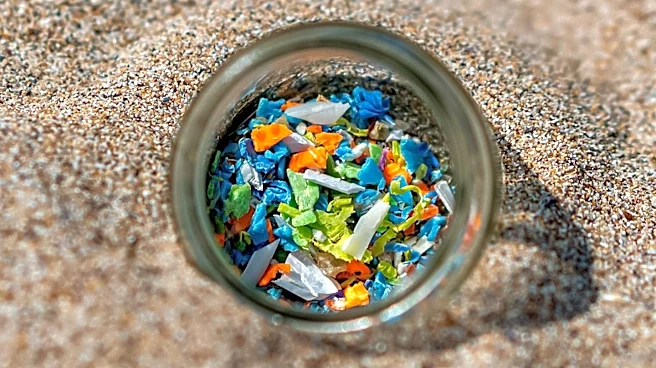
A study conducted by researchers led by Anna Ida Sunaryo Purwiyanto found microplastics in every sample of sea salt collected from markets across Lombok Island, Indonesia. This discovery suggests that a common pantry staple, sea salt, is now carrying
evidence of widespread ocean pollution. The research, reported by Mongabay, involved collecting 20 sea salt samples from 10 markets. The researchers separated and examined suspected particles using a stereo microscope. They noted that coarse crystal sea salt contained more microplastics than fine salt, likely due to additional washing and filtering processes for the latter. The presence of microplastics in all samples indicates pervasive contamination in the waters surrounding Lombok Island.
Why It's Important?
This finding is important because it highlights another pathway through which plastic waste is entering the human food chain, specifically through a basic and widely consumed product like salt. While the immediate health risks from ingesting microplastics in sea salt are considered low by experts like Tamara Galloway of Exeter University, the study underscores the broader issue of microplastic pollution. It serves as a tangible indicator of the extent of plastic contamination in global oceans and its infiltration into daily life. This situation could prompt increased scrutiny on food safety standards and regulatory frameworks concerning microplastics in food products, potentially leading to new guidelines for producers and consumers.
What's Next?
For producers, immediate actions could include implementing more rigorous washing and filtering processes, especially for coarse crystal sea salt, to reduce microplastic content in the final product. The study also points to a significant regulatory gap, as there are currently no standardized guidelines for microplastics in salt products. This absence makes it challenging to compare results and enforce quality standards effectively. Moving forward, there may be calls for regulators to include microplastic screening in food safety and salt quality standards. Such measures would provide clearer frameworks for both producers and regulatory bodies to address and mitigate microplastic contamination in salt and potentially other food items.
Beyond the Headlines
The pervasive presence of microplastics in sea salt is a stark reminder of the long-term environmental consequences of plastic pollution. It illustrates how human activities, particularly the disposal of plastic waste, can have far-reaching and often invisible impacts on ecosystems and, subsequently, on human health. This issue extends beyond just salt, as previous research has identified microplastics in seafood, drinking water, and various other environmental matrices. The ethical implications revolve around corporate responsibility in plastic production and waste management, as well as consumer awareness and behavior. Culturally, it may lead to a greater demand for sustainable practices and products, fostering a shift towards a more circular economy and reduced reliance on single-use plastics.