



What's Happening?
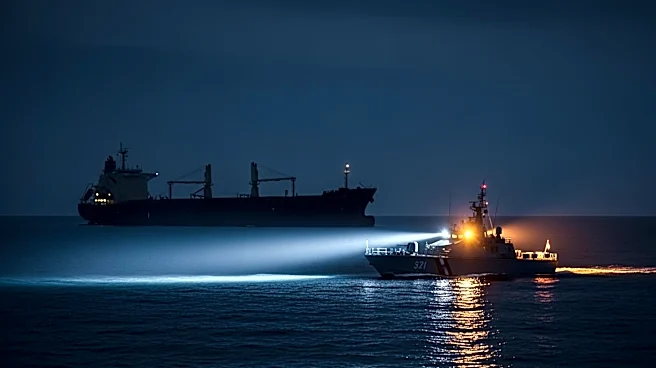
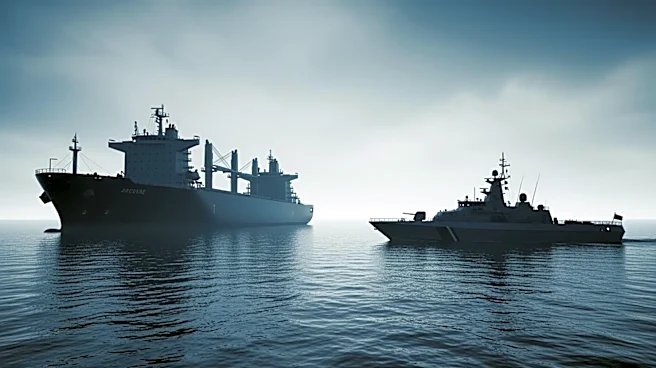
The U.S. Central Command (CENTCOM) has released footage showcasing the seizure of the Iranian ship Touska by U.S. Marines. The video captures the Marines executing a tactical operation, which involved leaving the ship, boarding a helicopter, and rappelling
from ropes to take control of the vessel. This operation highlights the strategic capabilities and readiness of U.S. military forces in handling maritime security threats. The release of this footage serves as a demonstration of the U.S. military's commitment to maintaining security and stability in international waters, particularly in regions where tensions may arise.
Why It's Important?
The release of this footage underscores the U.S. military's proactive stance in ensuring maritime security, particularly in areas prone to geopolitical tensions. By showcasing the successful seizure of the Iranian vessel, the U.S. aims to deter potential threats and reassure allies of its operational capabilities. This action may influence international relations, especially concerning U.S.-Iran dynamics, and could impact diplomatic negotiations or military strategies in the region. The demonstration of military prowess serves as a reminder of the U.S.'s role in safeguarding global maritime routes, which are crucial for international trade and security.
What's Next?
Following the release of the footage, there may be diplomatic discussions or responses from Iran regarding the seizure of the vessel. The U.S. may continue to monitor and patrol international waters to prevent similar incidents. Additionally, this event could lead to increased military presence or exercises in the region to further ensure security. Stakeholders, including international maritime organizations and regional governments, may engage in dialogue to address security concerns and prevent escalation of tensions.
Beyond the Headlines
The operation and its public disclosure may have broader implications for international maritime law and the rules of engagement in contested waters. It raises questions about the balance between national security and international diplomacy, as well as the ethical considerations of military interventions. The event could also influence future military policies and strategies, particularly in how nations address threats in international waters.