









What's Happening?
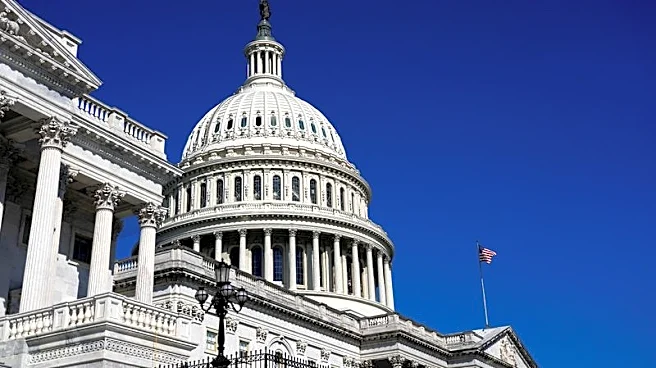
The U.S. Senate narrowly voted against a resolution aimed at limiting President Trump's war powers concerning Iran. The resolution, led by Democratic Senator Raphael Warnock, sought to require the president to withdraw U.S. Armed Forces from hostilities
with Iran unless Congress explicitly authorized such actions. The vote ended with a 47 to 48 result, with four Republican senators joining nearly all Democrats in support of the resolution. This decision comes as lawmakers express concerns over a secretive U.S.-Iran agreement, with Senate Majority Leader John Thune requesting the agreement's text and a briefing from the administration. The resolution's rejection follows a recent House resolution that also aimed to end the conflict without congressional approval, marking a shift in GOP support for the war.
Why It's Important?
The Senate's decision highlights ongoing tensions between the legislative and executive branches over military engagement and war powers. The resolution's rejection underscores the challenges Congress faces in asserting its authority over military actions, especially in conflicts lacking explicit congressional authorization. The secretive nature of the U.S.-Iran agreement raises transparency concerns, potentially affecting U.S. foreign policy and international relations. The outcome also reflects a growing divide within the Republican Party, as some members break ranks to support limiting presidential war powers. This development could influence future legislative efforts to curtail executive military authority and impact U.S. military strategy in the Middle East.
What's Next?
The Senate's rejection of the resolution does not end the debate over presidential war powers. Lawmakers may continue to push for greater transparency and congressional oversight of military engagements. The administration's legal justification for its actions, particularly regarding the War Powers Resolution of 1973, remains a contentious issue. Further legislative attempts to limit the president's military authority could arise, especially if more GOP members express dissent. The ongoing U.S.-Iran negotiations and the potential for renewed hostilities will likely keep this issue at the forefront of congressional discussions.