


What's Happening?
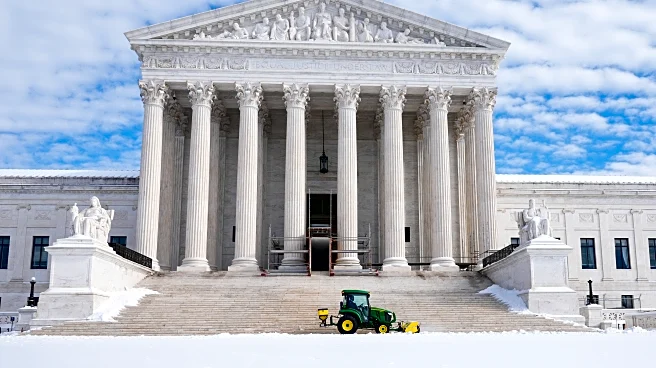
The Supreme Court is currently deliberating on the case of Trump v. Slaughter, which questions the president's authority to dismiss executive branch officials without cause at independent agencies. This case has sparked significant debate over the constitutional
legitimacy of such agencies, which were first established under President Woodrow Wilson and later codified in Humphrey's Executor v. United States. The case challenges the notion that these agencies, which have expanded in power since 1934, can operate independently of presidential oversight. Critics argue that this independence allows them to wield more power over Americans than any other government branch, creating rules, investigating citizens, and imposing fines without direct accountability. The Supreme Court has previously overturned the Chevron deference, which allowed agencies broad regulatory powers, and some argue that Humphrey's Executor should face a similar fate.
Why It's Important?
The outcome of this case could significantly alter the balance of power within the U.S. government. If the Supreme Court rules in favor of expanding presidential authority over independent agencies, it could lead to a consolidation of power within the executive branch. This shift might reduce the autonomy of agencies like the Federal Trade Commission, potentially impacting their ability to regulate industries and enforce laws independently. Such a decision could also set a precedent for future administrations, affecting how executive power is exercised and checked. The debate highlights broader concerns about the role and scope of government agencies and the potential for political influence over their operations.
What's Next?
Should the Supreme Court decide to expand presidential powers, it is likely to provoke a strong response from political leaders and civil society groups. Democrats, who have historically supported the independence of these agencies, may push for legislative measures to counterbalance the decision. Additionally, the ruling could lead to increased scrutiny of agency operations and calls for reform to ensure accountability and transparency. The decision may also influence future appointments and the functioning of the executive branch, as presidents could gain more direct control over agency leadership and policy direction.
Beyond the Headlines
This case raises fundamental questions about the nature of American democracy and the separation of powers. The debate over independent agencies touches on issues of governance, accountability, and the potential for bureaucratic overreach. It also reflects broader political dynamics, with different parties advocating for varying degrees of executive power based on their current political standing. The decision could have long-term implications for how government functions and the role of the judiciary in interpreting constitutional limits on executive authority.