




What's Happening?
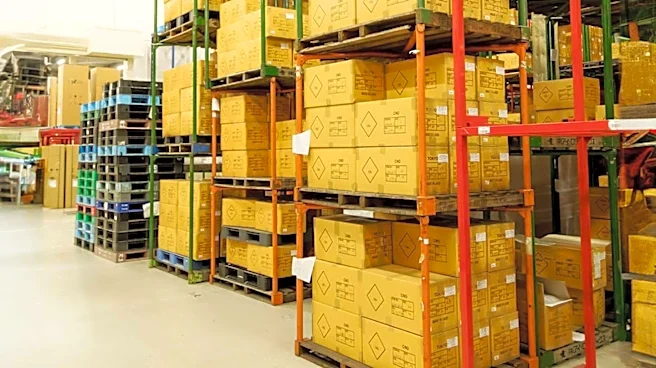
The World Customs Organization (WCO) has developed the Harmonized System of Nomenclature (HSN) to standardize the classification of goods across international borders. Introduced in 1988, the HSN provides a consistent coding system for physical products,
which is used by over 200 countries for customs, tariffs, and trade statistics. The system is structured into codes of 4, 6, or 8 digits, with the first six digits being universally recognized. This system allows for a uniform classification of goods, such as smartphones, which have the same initial six-digit code regardless of whether they are shipped to India, the US, or Germany. The WCO's HSN system is crucial for ensuring that goods are classified consistently, which aids in the smooth processing of international trade transactions.
Why It's Important?
The HSN system is vital for global trade as it reduces friction and discrepancies in the classification of goods, thereby facilitating smoother international transactions. For businesses, using the correct HSN code ensures that the appropriate tax rates are applied, which is crucial for compliance and financial accuracy. Misclassification can lead to penalties and delays in customs processing, impacting the efficiency of trade operations. The system also supports the accurate collection of trade statistics, which are essential for economic analysis and policy-making. By providing a standardized framework, the WCO's HSN system helps maintain the integrity of international trade and supports economic stability.
What's Next?
As global trade continues to evolve, the WCO may further refine the HSN system to accommodate new products and technologies. Businesses will need to stay informed about any updates to the system to ensure compliance and avoid potential penalties. Additionally, as countries adopt more digital solutions for customs processing, the integration of the HSN system into these platforms will be crucial for maintaining efficiency and accuracy in trade operations. Stakeholders, including governments and businesses, will likely continue to collaborate with the WCO to enhance the system's effectiveness and address any emerging challenges in international trade.
Beyond the Headlines
The HSN system not only impacts trade but also has broader implications for economic policy and international relations. By providing a common language for trade classification, it helps reduce misunderstandings and disputes between countries, fostering a more cooperative global trade environment. Furthermore, the system's role in standardizing trade data collection supports transparency and accountability in international commerce. As the global economy becomes increasingly interconnected, the importance of such standardized systems will only grow, highlighting the WCO's critical role in facilitating global trade.