




What's Happening?
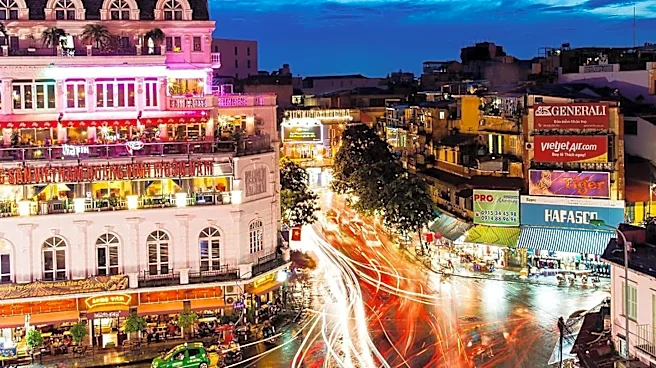
The World Economic Forum (WEF) is co-branding the Autumn Economic Forum 2026 (AEF 2026) with Ho Chi Minh City, Vietnam, marking the first time the WEF has implemented such a model with a specific locality in a country. The forum, scheduled from October
26 to 29, 2026, will feature two main days, October 27 and 28, under the WEF co-brand. This initiative aims to broaden Vietnam's integration into the global economic network and foster international cooperation. The event, directed by the Prime Minister and chaired by the Ho Chi Minh City People's Committee, is being implemented by the HCMC Center for the Fourth Industrial Revolution (HCMC C4IR) in collaboration with the WEF and other partners. The AEF 2026, previously known as the Ho Chi Minh City Economic Forum (HEF), has been renamed to reflect an expanded scope and ambition to become an international-level knowledge forum. Approximately 1,500 domestic and international delegates are expected to attend, including government leaders, representatives from ministries, businesses, experts, and international organizations.
Why It's Important?
This co-branding initiative signifies a significant step for Vietnam in enhancing its international economic standing and attracting global attention. The WEF's decision to partner with Ho Chi Minh City underscores Vietnam's growing prestige and capacity for international economic dialogue, built on decades of reform. For Ho Chi Minh City, the forum presents a crucial opportunity to strengthen connections with multinational corporations, investors, and technology partners, thereby promoting its investment environment and seeking new cooperation avenues. For Vietnamese businesses, the event opens additional channels to access capital, technology, and international partners, which is vital in a global economy characterized by shifting investment flows and intense technological competition. The forum's focus on new growth drivers and international cooperation is particularly relevant as Vietnam seeks to absorb technology, develop domestic enterprises, and deepen its participation in global value chains.
What's Next?
The Autumn Economic Forum 2026 will proceed with its four-day schedule from October 26 to 29, with the co-branded WEF activities taking place on October 27 and 28. The forum will focus on four key pillars: the role of mega-cities, disruptive technologies and innovation ecosystems, new cooperation models, and the private sector's role in driving growth. The CEO 500 – TEA CONNECT program on October 26 is expected to bring together business leaders and major investors to discuss shifts in foreign direct investment, technology, and global financial flows. Thematic sessions on October 27 will delve into global economic shifts and economic restructuring experiences, while a high-level plenary session on October 28, themed 'The Convergence of New Global Growth Poles,' will feature leaders from Vietnam, other countries, and the WEF. A notable event will be '60 Minutes with Prime Minister Le Minh Hung,' focusing on 'Positioning Vietnam in the Global Future.' The effectiveness of the forum will be measured by its ability to translate dialogues into concrete investment projects and cooperation programs.
Beyond the Headlines
The WEF's unprecedented co-branding with a local entity like Ho Chi Minh City highlights a potential shift in how global economic forums engage with emerging economies. This model could serve as a blueprint for future collaborations, allowing the WEF to tap into regional growth poles more directly and foster localized economic development. For Vietnam, this partnership is not just about attracting investment but also about building an international-level knowledge forum, which can significantly enhance its soft power and influence in global economic discourse. The emphasis on technology and innovation, alongside traditional economic cooperation, reflects a broader global trend towards knowledge-based economies. The forum's success could also influence how other developing nations seek to leverage international platforms to accelerate their economic integration and development, potentially leading to more decentralized and regionally focused global economic dialogues.