







What's Happening?
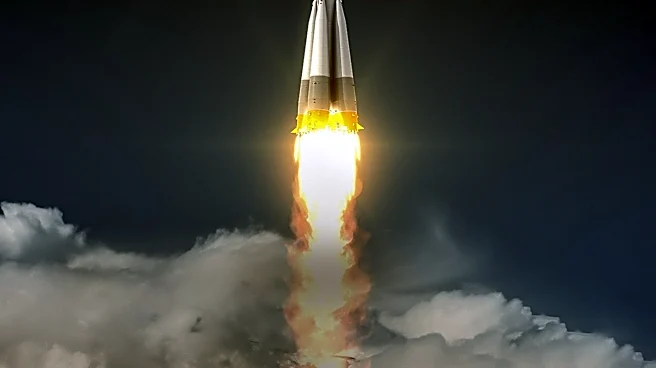
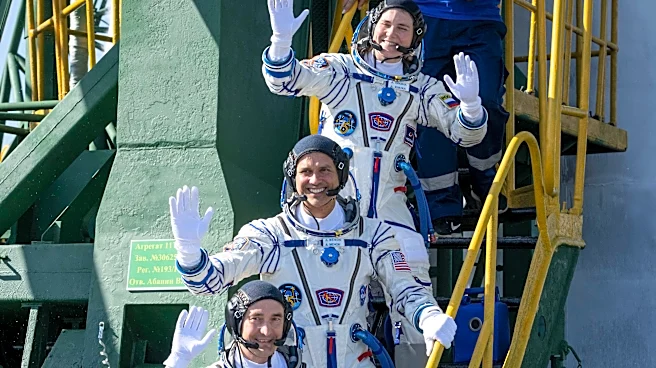
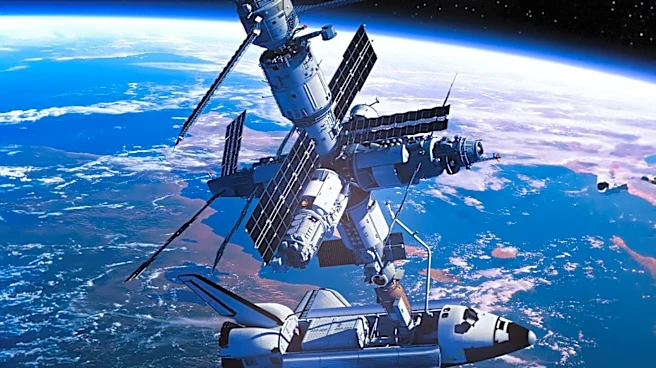
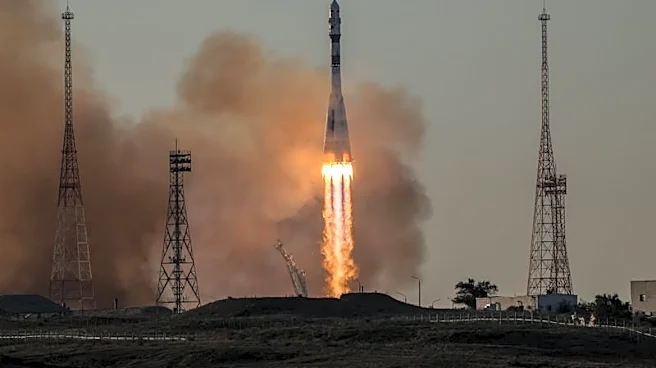
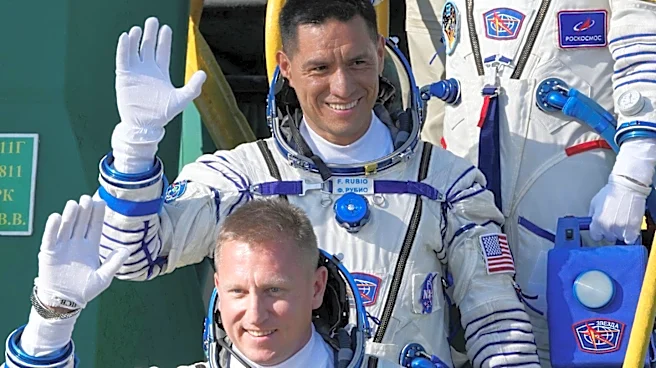
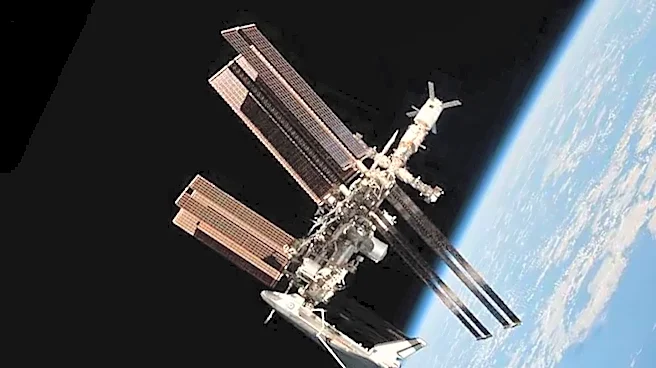
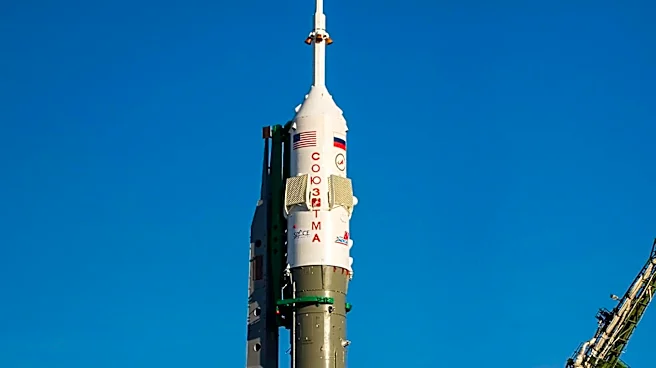
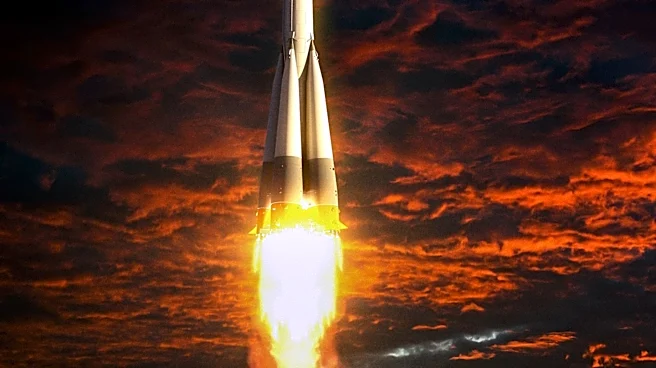
NASA astronaut Anil Menon, along with Roscosmos cosmonauts Pyotr Dubrov and Anna Kikina, have successfully arrived at the International Space Station (ISS) aboard the Soyuz MS-29 spacecraft. The spacecraft docked at the ISS's Prichal module at 1:52 p.m.
EDT after launching from the Baikonur Cosmodrome in Kazakhstan earlier in the day. The crew is scheduled to open the hatch and enter the space station around 4 p.m. EDT. This mission marks the beginning of an approximately eight-month stay on the ISS, with the crew expected to return to Earth in April 2027. The event is being broadcast live on NASA+, Amazon Prime, and NASA's YouTube channel, providing viewers with real-time coverage of the hatch opening and crew activities.
Why It's Important?
The arrival of the Soyuz MS-29 crew at the ISS is a significant event in international space collaboration, highlighting the ongoing partnership between NASA and Roscosmos. This mission contributes to the continuous human presence on the ISS, which serves as a critical platform for scientific research and technological development. The extended stay of the crew will allow for a wide range of experiments and studies in microgravity, benefiting fields such as medicine, materials science, and Earth observation. The mission also underscores the importance of international cooperation in space exploration, as it involves joint efforts and shared resources between the United States and Russia.
What's Next?
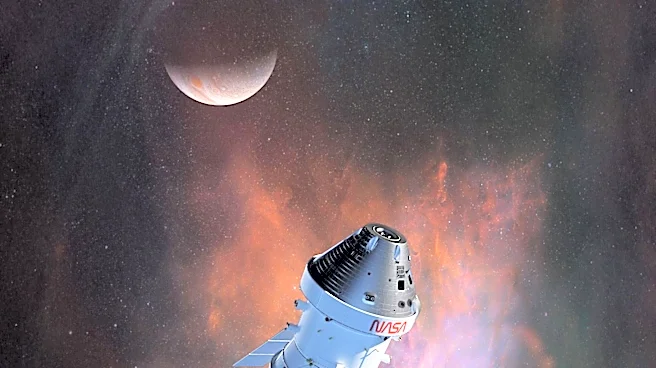
Following their arrival, the crew members will begin their scheduled activities on the ISS, which include conducting scientific experiments, maintaining the station, and participating in educational outreach. The mission will also involve preparations for future space exploration initiatives, such as the Artemis program, which aims to return humans to the Moon. The crew's work will contribute to the broader goals of expanding human presence in space and developing technologies for long-duration missions. As the mission progresses, updates and insights will be shared through various NASA communication channels, keeping the public informed about the crew's achievements and challenges.