





What's Happening?
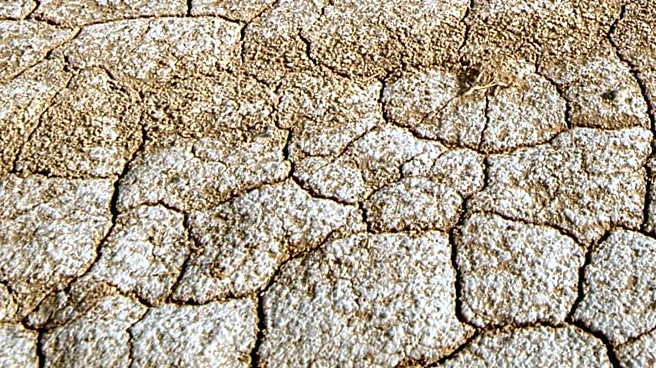
The latest U.S. Drought Monitor data, released on Thursday, indicates that drought conditions across central Minnesota have remained largely unchanged. Benton County continues to experience severe drought, with 98.12% of the county affected, a figure
consistent with the previous week. The county's Drought Severity and Coverage Index (DSCI) also held steady at 298, placing it among the highest in the region. Sherburne County similarly shows no change from the previous week, with 93.93% of its area in severe drought and a DSCI of 294. In contrast, Stearns County saw an increase in moderate drought coverage, rising from 93.43% last week to 99.98% this week, and its DSCI increased from 195 to 202. Three months prior, Stearns County had no drought designation. Statewide, 80.39% of Minnesota is abnormally dry or worse, a slight decrease from 87.49% last week. The statewide DSCI also fell from 188 to 174.
Why It's Important?
The persistence of drought conditions in central Minnesota, particularly the severe drought in Benton and Sherburne counties, carries significant implications for the region's agriculture, water resources, and local economies. Farmers in these areas may face reduced crop yields, increased irrigation costs, and potential livestock feed shortages, leading to financial strain. The sustained drought can also impact municipal water supplies, potentially leading to water restrictions and increased utility costs for residents. Environmentally, prolonged drought can stress ecosystems, increase wildfire risks, and harm local wildlife. The rising moderate drought coverage in Stearns County, which had no drought three months ago, highlights a concerning trend of expanding dry conditions. While the statewide figures show a slight improvement, the long-term trend indicates a decrease in areas free from drought, suggesting a broader and more entrenched issue that could require significant resource management and adaptation strategies.
What's Next?
With drought conditions holding steady or worsening in parts of central Minnesota, authorities and residents will likely continue to monitor the situation closely. Farmers may need to implement further drought-resistant agricultural practices or seek assistance programs to mitigate losses. Water management agencies could consider or maintain water conservation measures to preserve dwindling supplies. The U.S. Drought Monitor will continue to release weekly updates, which will be crucial for tracking any changes in severity and coverage. The long-term outlook for precipitation and temperature will determine whether these drought conditions persist, intensify, or alleviate. Local and state governments may need to develop or update drought contingency plans to address potential impacts on public health, economic stability, and environmental well-being, especially if the trend of decreasing non-drought areas continues.