


What's Happening?
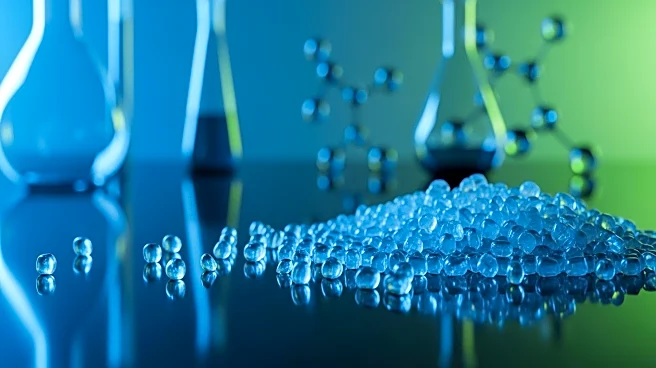
Taylor Uekert, a senior researcher at the National Laboratory of the Rockies (NLR), is making significant strides in improving plastic recycling and chemical production processes. Uekert, who has a background in nanoengineering, focuses on enhancing the efficiency
and environmental impact of these processes. Her work involves using analysis to evaluate the economic and environmental performance of new technologies, particularly in the realm of plastic recycling and converting waste into chemicals. Uekert's approach includes developing tools to identify potential issues in the early stages of research, aiming to address them before scaling up. Her efforts are part of a broader initiative at NLR to make recycling and chemical production more sustainable and economically viable.
Why It's Important?
Uekert's work at NLR is crucial as it addresses the growing concerns about plastic waste and the environmental impact of chemical production. By improving recycling processes and developing sustainable methods for chemical production, her research could significantly reduce pollution and resource consumption. This has the potential to transform industries reliant on plastics and chemicals, making them more sustainable and less harmful to the environment. Additionally, her focus on early-stage analysis tools could lead to more efficient research and development processes, ultimately accelerating the adoption of environmentally friendly technologies. This work not only benefits the environment but also supports economic growth by creating more sustainable industrial practices.
What's Next?
Uekert and her team at NLR are exploring ways to recycle hard-to-process materials like textiles and PVC, aiming to make these processes both economically and environmentally viable. They are also working on identifying critical chemicals that are essential for supply chain resiliency and pollution reduction. The next steps involve developing a list of these chemicals to prioritize research efforts. Furthermore, Uekert is working on making analysis tools more accessible to early-stage researchers, which could enhance the development of sustainable technologies. This ongoing research is expected to contribute to more resilient and sustainable industrial practices in the future.