



What's Happening?
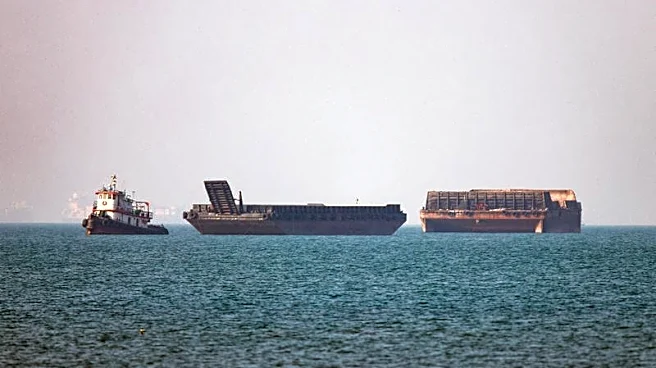
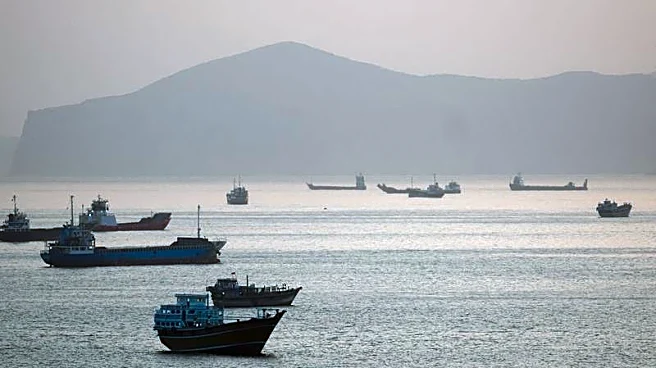
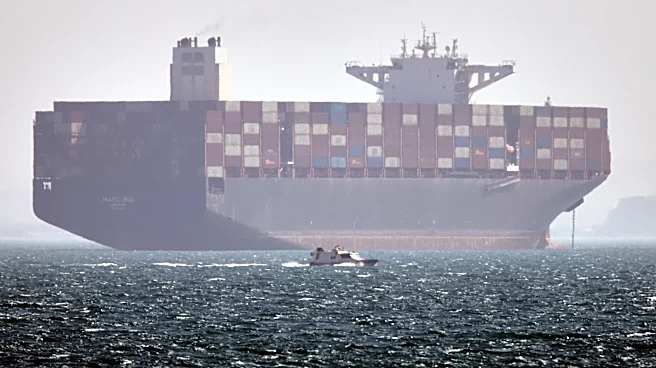
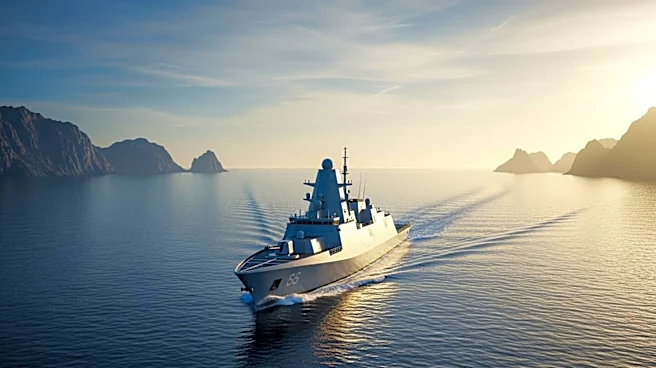
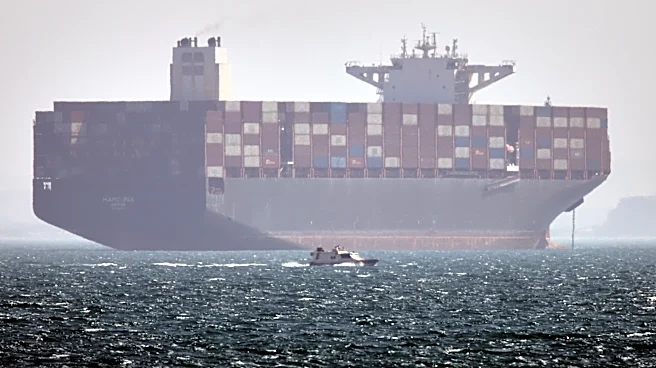
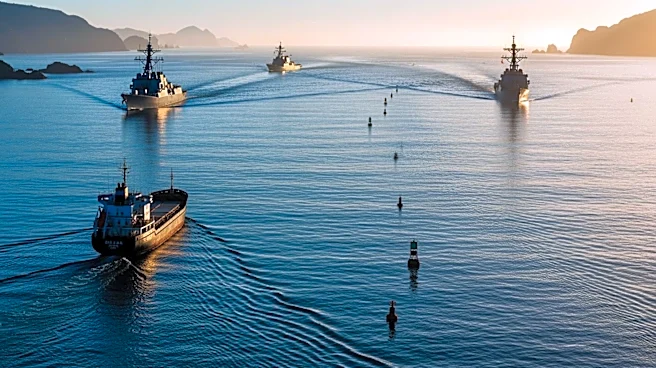
The United States has initiated 'Project Freedom,' a military operation aimed at reopening the Strait of Hormuz for commercial shipping. Announced by President Trump and executed by U.S. Central Command, the operation seeks to counteract Iran's de facto
control over the strait, which has been closed since the onset of Operation Epic Fury in February 2026. The closure has significantly impacted global oil supply, with prices peaking at over $126 per barrel. The U.S. operation involves a presence and information-sharing mission rather than direct convoy escorts, with initial success marked by the transit of two U.S.-flagged merchant vessels. However, the situation remains tense, with exchanges of fire between U.S. and Iranian forces, raising questions about the sustainability of the current ceasefire.
Why It's Important?
The Strait of Hormuz is a critical chokepoint for global oil transportation, with about 20% of the world's oil passing through it. The closure has disrupted global energy markets and strained U.S. relations with allies dependent on Gulf oil. 'Project Freedom' represents a strategic effort by the U.S. to assert control and ensure the free flow of commerce, potentially stabilizing oil prices and alleviating economic pressures. However, the operation also risks escalating military tensions with Iran, which could lead to broader conflict and further destabilize the region. The success of this operation is crucial for maintaining global energy security and U.S. geopolitical influence in the Middle East.
What's Next?
The continuation of 'Project Freedom' will depend on its ability to maintain safe passage through the strait without provoking further Iranian aggression. The U.S. must balance military actions with diplomatic efforts to prevent the breakdown of the ceasefire. The operation's success could lead to a more permanent maritime security framework in the Gulf, but failure could result in renewed hostilities. The international community, particularly U.S. allies in the region, will be closely monitoring the situation, as any escalation could have significant economic and political repercussions.