



What's Happening?
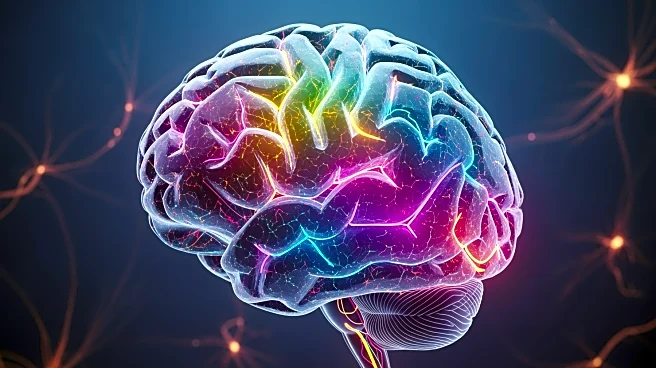
Recent neuroscience research has uncovered that the brain organizes emotions in a structured, map-like representation, similar to how it maps physical spaces. This discovery was highlighted during Brain Awareness Week 2026, an annual event that encourages
reflection on the brain's capabilities. The research, conducted by scientists at Emory University, suggests that brain regions responsible for memory and spatial navigation, particularly the hippocampus, also play a crucial role in organizing emotional knowledge. The study indicates that emotions are not random but are organized along two dimensions: valence, which measures how pleasant or unpleasant an emotion feels, and arousal, which measures the intensity of the body's response. This understanding could lead to better insights into mental health and emotional processing.
Why It's Important?
The findings from this research have significant implications for mental health treatment and understanding emotional processing. By mapping emotions in a structured way, scientists can better understand how emotions are experienced and processed in the brain. This could lead to improved therapies for emotional and mental health disorders, as it provides a clearer framework for understanding emotional experiences. The research also highlights the brain's complexity and its ability to organize not just physical spaces but also abstract concepts like emotions. This could pave the way for new approaches in neuroscience and psychology, potentially benefiting individuals with emotional regulation issues.
What's Next?
As the research on emotional mapping in the brain progresses, it is likely that further studies will explore how these findings can be applied in clinical settings. Researchers may investigate how this emotional mapping can be used to develop new therapeutic techniques for mental health disorders. Additionally, there may be increased interest in exploring how different factors, such as genetics or environment, influence the brain's ability to map emotions. This could lead to personalized approaches in mental health treatment, tailored to an individual's unique emotional map.
Beyond the Headlines
The discovery of the brain's emotional mapping system also raises questions about the ethical implications of manipulating emotions through neuroscience. As our understanding of emotional processing deepens, there may be debates about the potential for using this knowledge in ways that could alter emotional experiences. This could lead to discussions about the ethical boundaries of neuroscience and the importance of safeguarding individual emotional autonomy. Furthermore, the research underscores the interconnectedness of different brain functions, highlighting the need for a holistic approach to studying the brain.