



What's Happening?
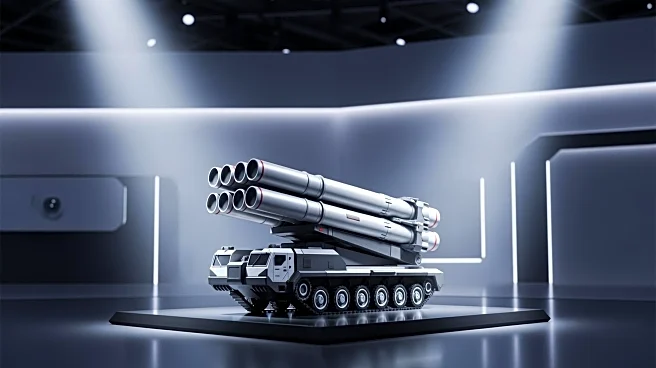
Russia is set to unveil its latest multiple launch rocket system (MLRS), the Sarma, at the World Defense Show 2026 in Riyadh. This move is part of Moscow's strategy to engage Middle Eastern defense markets despite facing Western sanctions. The Sarma MLRS,
mounted on a KAMAZ-63501 8x8 armored chassis, is designed to be a lighter and more mobile alternative to existing heavy rocket artillery systems. It features six launch tubes and can be operated remotely, addressing concerns about crew vulnerability to drone attacks. The system is capable of firing guided rockets to ranges of up to 200 kilometers.
Why It's Important?
The introduction of the Sarma MLRS highlights Russia's ongoing efforts to maintain its presence in the global arms market, particularly in regions less affected by Western sanctions. By showcasing this new system in Saudi Arabia, Russia aims to appeal to Middle Eastern countries that prioritize robust and cost-effective military solutions. This development underscores the geopolitical dynamics in the region, where countries may seek alternatives to Western military equipment. The Sarma's features, such as remote operation and enhanced crew protection, reflect the evolving nature of modern warfare, where technology plays a crucial role in ensuring the survivability of military assets.
What's Next?
The World Defense Show 2026 will serve as a platform for Russia to strengthen its defense ties with Middle Eastern countries. The success of the Sarma MLRS in this market could lead to further contracts and collaborations, potentially expanding Russia's influence in the region. However, the ongoing sanctions and geopolitical tensions may pose challenges to Russia's defense exports. Observers will be watching closely to see how Middle Eastern countries respond to Russia's offerings and whether this will impact their existing defense relationships with Western nations.
Beyond the Headlines
The unveiling of the Sarma MLRS also raises questions about the ethical implications of arms sales in regions with complex political landscapes. The potential for these weapons to be used in conflicts raises concerns about their impact on regional stability and human rights. Additionally, the development of more advanced military technologies highlights the ongoing arms race and the need for international dialogue on arms control and regulation.