






What's Happening?
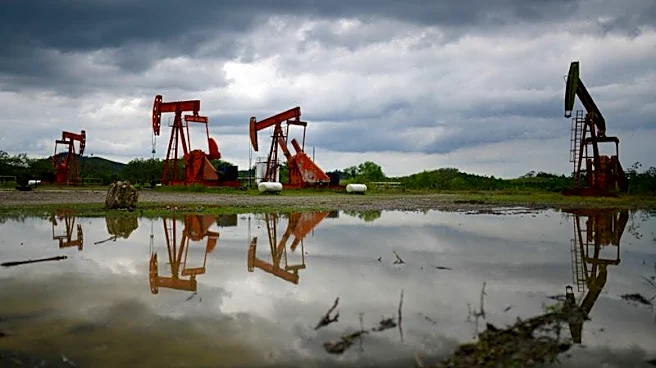
Oil prices remained stable on Wednesday as renewed hostilities between the U.S. and Iran introduced uncertainty into the market. Brent futures rose by 0.27% to $91.70 a barrel, while U.S. West Texas Intermediate crude increased by 0.26% to $88.43 a barrel.
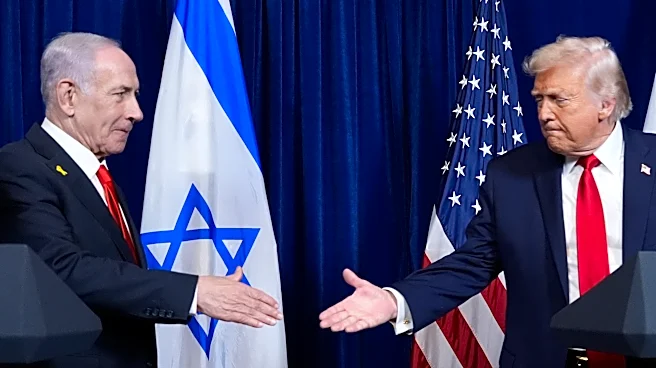
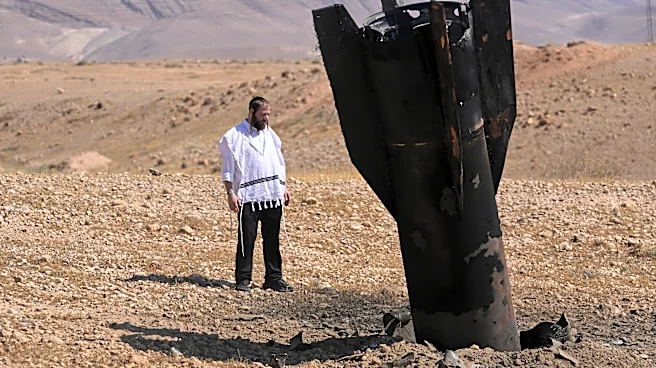
The market had initially reacted to military exchanges between the U.S. and Iran, which shifted focus back to potential supply disruptions. The U.S. military's recent strikes on Iranian targets followed President Trump's response to the downing of a U.S. Apache helicopter. Tehran has threatened to resume hostilities if Israel continues its attacks on Hezbollah in Lebanon, complicating efforts to extend a ceasefire. The situation has also affected shipping through the Strait of Hormuz, a critical passage for global oil and gas transport, as Iran continues to block most shipping and the U.S. imposes a blockade on Iranian ports.
Why It's Important?
The renewed hostilities between the U.S. and Iran have reintroduced a geopolitical risk premium into oil markets, affecting global oil prices and potentially disrupting supply chains. The Strait of Hormuz is a vital corridor for the world's crude oil and liquefied natural gas, and any prolonged disruption could have significant implications for global energy markets. The situation underscores the fragility of the region's geopolitical landscape and its impact on global economic stability. The ongoing conflict also highlights the challenges in achieving a durable peace settlement, with potential repercussions for international relations and energy security.
What's Next?
The continuation of hostilities could lead to further military engagements and increased volatility in oil markets. Diplomatic efforts may intensify to de-escalate tensions and secure the reopening of the Strait of Hormuz. The U.S. and its allies may seek to negotiate terms that prevent further escalation, while monitoring the impact on global oil supply and prices. The situation may also prompt discussions on alternative energy routes and strategies to mitigate the impact of regional conflicts on global energy markets.