
What's Happening?
In the eleventh week of the Iran war, a fragile ceasefire is in place between the U.S. and Iran. During this period, Russia is reportedly aiding Iran in rebuilding its military capabilities by sending
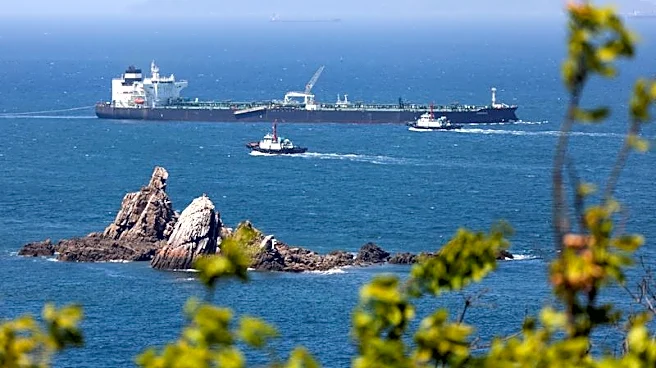
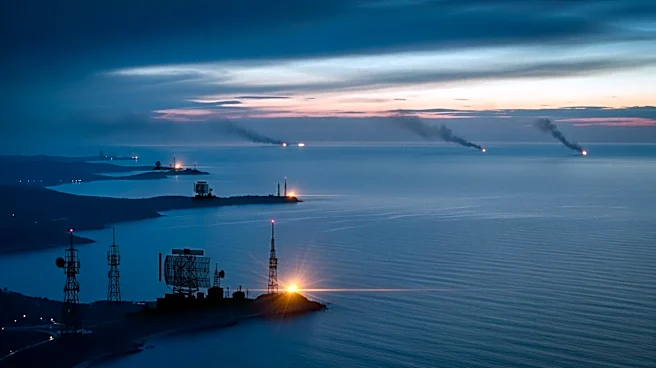
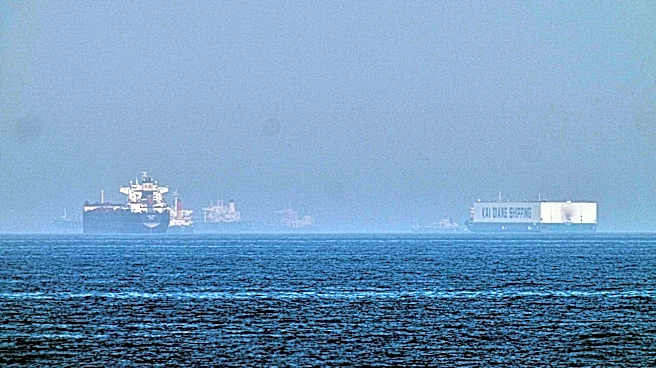
drone components via the Caspian Sea. This support is part of Iran's broader effort to restore its missile and drone capabilities, potentially preparing for a resumption of conflict with the U.S. and Israel. Additionally, the Iranian Revolutionary Guard Corps (IRGC) has established a maritime authority for the Strait of Hormuz, requiring ships to apply for passage, further complicating the geopolitical landscape.
Why It's Important?
The involvement of Russia and the People's Republic of China in supporting Iran highlights the complex international dynamics at play. Their assistance to Iran could escalate tensions and prolong the conflict, impacting global security and economic stability. The strategic importance of the Strait of Hormuz as a vital shipping route for global oil supplies underscores the potential for significant economic repercussions if the conflict intensifies. The situation also poses challenges for U.S. foreign policy and its alliances in the region.
What's Next?
As Iran continues to rebuild its military capabilities, the potential for renewed conflict remains high. The international community may need to engage in diplomatic efforts to prevent further escalation and ensure the security of global shipping routes. The U.S. and its allies will likely monitor the situation closely, considering potential responses to Iran's military advancements and the involvement of Russia and China.