




What's Happening?
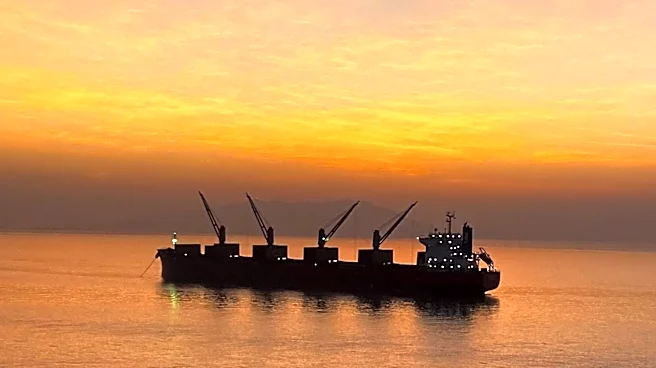
Researchers are warning of a potential marine super-spreader event following the prolonged closure of the Strait of Hormuz. The closure has left over 1,500 commercial vessels stranded, allowing marine organisms to accumulate on their hulls. Once these
ships resume their routes, they could transport invasive species to new ecosystems, triggering a global bioinvasion. The study, led by the University of Maryland Center for Environmental Science, highlights the ecological risks posed by the unprecedented lay-up of ships and calls for improved biofouling management to prevent the spread of invasive species.
Why It's Important?
The potential for a marine bioinvasion poses significant ecological and economic risks. Invasive species can disrupt local ecosystems, outcompete native species, and cause long-term environmental damage. The closure of the Strait of Hormuz has created conditions that could facilitate the spread of these species on a global scale. Addressing this issue is crucial for protecting marine biodiversity and preventing economic losses in affected regions. The study emphasizes the need for international cooperation and proactive measures to manage biofouling and mitigate the risks associated with invasive species.
What's Next?
Researchers recommend several measures to address the potential bioinvasion threat, including increased monitoring at high-risk ports and improved forecasting of ship movements. Strengthening international response efforts and enhancing biofouling management practices are also crucial. These steps aim to reduce the risk of invasive species spreading and ensure the protection of marine ecosystems. The study calls for collaboration among ship operators, port authorities, and environmental managers to implement these measures effectively and prevent a global marine bioinvasion.