
What's Happening?
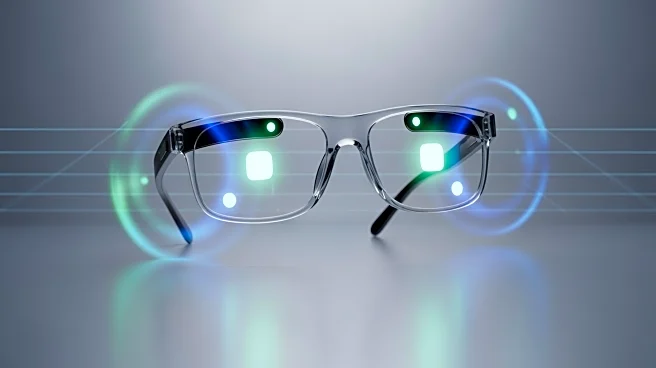
At CES 2026, several companies unveiled new augmented reality (AR) glasses that promise to reshape consumer experiences. Notable among these are Rokid's lightweight glasses with standalone AI features,
Xreal's Android XR glasses, and ASUS's gamer glasses offering a high-resolution virtual display. Lumus showcased prototypes with improved optics for better outdoor use, while Rokid's advanced model demonstrated local AI processing. Viture's XR headsets aim to bridge AR with spatial computing, and Snap previewed browser-capable glasses for everyday tasks. These innovations indicate a shift towards more practical and consumer-friendly AR solutions.
Why It's Important?
The advancements in AR technology showcased at CES 2026 highlight the growing potential for AR glasses to become mainstream consumer products. With improvements in design, functionality, and user experience, these devices could significantly impact various sectors, including gaming, navigation, and personal computing. The development of standalone AR glasses with AI capabilities suggests a move towards more integrated and seamless digital experiences, potentially transforming how users interact with technology in their daily lives.
What's Next?
As these AR glasses move towards commercial availability, companies will likely focus on refining their products and expanding their market reach. Consumer feedback and adoption rates will play a crucial role in shaping future iterations. The competition among tech companies to capture the AR market could lead to rapid advancements and new applications, further integrating AR into everyday life. Additionally, regulatory and privacy considerations will need to be addressed as these technologies become more widespread.





