



What's Happening?
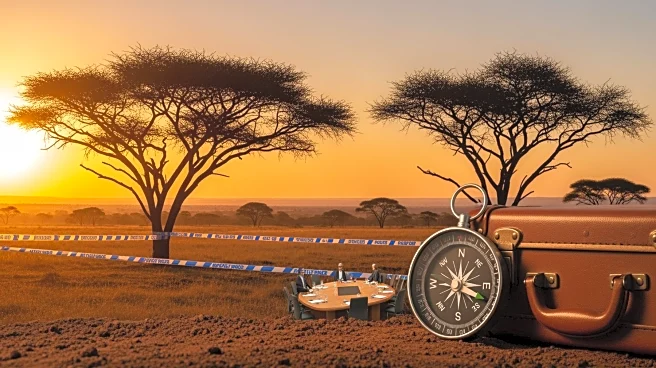
A recent Skift Megatrends report has spotlighted Africa's burgeoning tourism sector, emphasizing the continent's potential to attract significant investment and shape the future of global travel. The report, released at an event on Table Mountain in Cape
Town, highlights the role of a rising middle class, increasing inbound arrivals, and record levels of hotel development in driving this growth. Key themes include the expansion of luxury travel, with Africa being identified as a new frontier for high-value, experience-led tourism. The report also notes the growing economic impact of music residencies and live tourism, which are being leveraged to enhance visitation and extend tourist stays. Additionally, the transformation of travel marketing through AI-driven discovery tools is reshaping how destinations are perceived and evaluated by travelers.
Why It's Important?
The insights from the Skift report underscore the strategic importance of tourism as a driver of economic growth in Africa. By highlighting the continent's potential to attract luxury travelers and leverage cultural events, the report suggests that Africa could significantly boost its tourism economy. This growth could lead to increased job creation, urban regeneration, and broader economic benefits. The emphasis on infrastructure, policy certainty, and long-term capital investment as critical success factors suggests that destinations that align these elements will be better positioned to capitalize on the growing demand. The report also points to the need for a more integrated approach to tourism development, recognizing it as an interconnected system that spans various sectors.
What's Next?
For African countries, the next steps involve aligning infrastructure and policy with the demands of modern travelers. This includes enhancing air access, ensuring quality operations, and building investor confidence. The report suggests that destinations that can effectively integrate storytelling with infrastructure development will be more successful in attracting investment and tourists. Additionally, the role of technology in shaping destination visibility means that African tourism leaders will need to engage with AI-driven systems to ensure their stories are accurately represented and appealing to potential visitors.
Beyond the Headlines
The Skift report highlights deeper implications for the tourism sector, such as the ethical and cultural dimensions of promoting authentic experiences. As Africa positions itself as a luxury travel destination, there is an opportunity to redefine luxury beyond traditional opulence, focusing instead on privacy, authenticity, and cultural depth. This shift could lead to a more sustainable tourism model that respects local cultures and environments while providing unique experiences for travelers. Furthermore, the integration of tourism with creative industries and urban development could foster a more resilient and diversified economic landscape.