





What's Happening?
An Ohio farmer emphasizes the critical role of late-season weather in determining soybean crop yields. Owen Niese, a farmer in north central Ohio, notes that timely rainfall in late July and early August is crucial for soybean development. The USDA reports
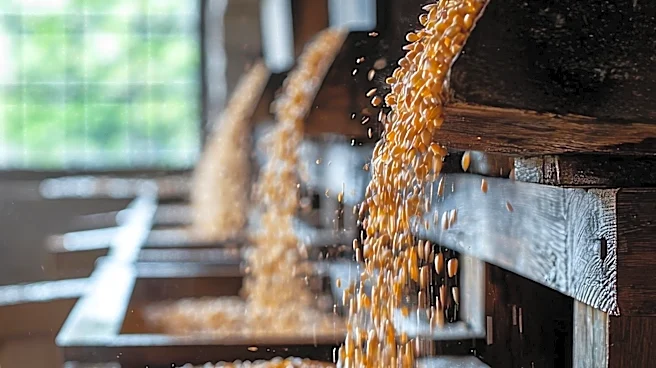
that Ohio corn is 90% silking and 37% in the dough stage, with 61% rated good to excellent. Soybeans are 87% blooming and 58% setting pods, with 59% rated good to excellent. Disease management, particularly for vomitoxin and tar spot, remains a key concern for corn growers in the region.
Why It's Important?
The reliance on late-season weather highlights the vulnerability of crop yields to climatic conditions. Timely rainfall is essential for optimizing soybean yields, which are a significant component of Ohio's agricultural economy. Effective disease management is also crucial for protecting corn yields and ensuring economic stability for farmers. The USDA's crop condition reports provide valuable insights into the health of Ohio's crops, guiding management decisions and highlighting areas of concern.
What's Next?
Farmers in Ohio will need to monitor weather conditions closely and adapt their management practices to optimize crop yields. The USDA's crop condition reports will continue to provide valuable insights into the health of Ohio's crops, guiding decision-making. As the season progresses, strategies to manage disease pressure and conserve soil moisture will be essential. Ongoing surveillance and timely interventions will be key to mitigating the impact of adverse weather conditions and safeguarding crop yields.