






What's Happening?
The Oregon Department of Agriculture (ODA) has confirmed the first-ever presence of Hydrilla verticillata, an invasive aquatic weed, in Oregon. The plant was discovered on private property in Jackson County in October. Hydrilla verticillata, often referred
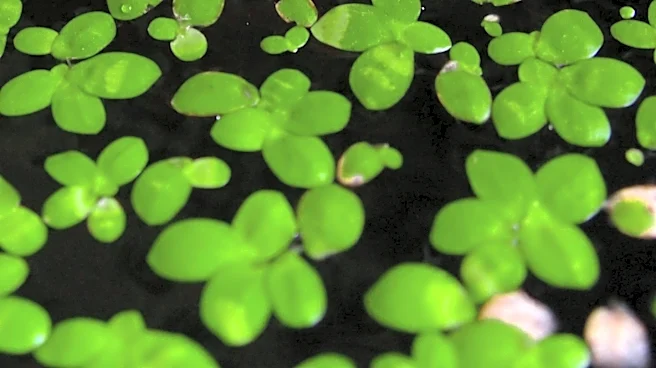
to as water thyme, is recognized as one of the most problematic invasive species globally. It forms dense mats of vegetation with long, slender branches and serrated leaves, which can obstruct waterways and displace native ecosystems. Troy Abercrombie, program manager for ODA's noxious weed control, described it as 'the worst invasive weed in the world' and noted its status as a federally listed noxious weed. The ODA considers this an early detection, as the plant is currently isolated to small ponds. In Oregon, it is classified as an A-rated invasive species, indicating it is not widespread and is a target for eradication using herbicides. The department is consulting with experts from Florida, a state that has invested hundreds of millions of dollars over the past decade to manage this persistent weed.
Why It's Important?
The detection of Hydrilla verticillata in Oregon carries significant environmental and economic implications. This invasive weed can severely disrupt aquatic ecosystems by outcompeting native plants, altering water flow, and impacting aquatic organisms. Its rapid growth, at least an inch per day, and diverse reproductive methods, including sprouting from tiny fragments or dormant buds, make it exceptionally difficult to control. The formation of thick mats can impede recreational activities like boating and swimming, potentially affecting local tourism and property values. Furthermore, the cost of managing Hydrilla verticillata can be substantial, as evidenced by Florida's expenditure of hundreds of millions of dollars. If the weed spreads, Oregon could face similar financial burdens for eradication and long-term management, diverting resources that could be used for other conservation efforts. The plant's ability to change river hydrology by slowing water flow and accumulating organic matter can lead to broader ecological damage.
What's Next?
Following the initial detection, the Oregon Department of Agriculture plans to proceed with eradication efforts, utilizing herbicides to treat the vegetative parts of the Hydrilla verticillata. However, experts like Samuel Chan from Oregon State University warn that dormant buds (turions and tubers) can remain in the sediment and resprout in subsequent seasons, necessitating years of vigilant monitoring and repeated treatment. The ODA is actively seeking public assistance, urging individuals to report any sightings of Hydrilla verticillata to oregoninvasiveshotline.org to aid in early detection and containment. Continued consultation with experts from states like Florida, which have extensive experience managing this weed, will be crucial for developing effective long-term strategies. The success of these immediate and ongoing efforts will determine whether Oregon can prevent the widespread establishment and costly impacts observed in other regions.
Beyond the Headlines
The arrival of Hydrilla verticillata in Oregon underscores the broader challenge of invasive species management in the United States, highlighting the interconnectedness of ecosystems and the ease with which non-native species can spread. This event serves as a stark reminder of the importance of stringent biosecurity measures and public awareness campaigns to prevent the introduction and establishment of invasive plants and animals. The plant's origin as an ornamental species for aquariums before its escape into the wild also points to the unintended consequences of human activities and the need for responsible practices in horticulture and pet trade. The long-term implications extend beyond immediate ecological damage, potentially affecting water quality, biodiversity, and the economic viability of water-dependent industries. This incident could prompt a review of existing state and federal regulations regarding invasive species monitoring and control, potentially leading to enhanced funding and collaborative efforts across state lines to combat such threats more effectively.