






What's Happening?
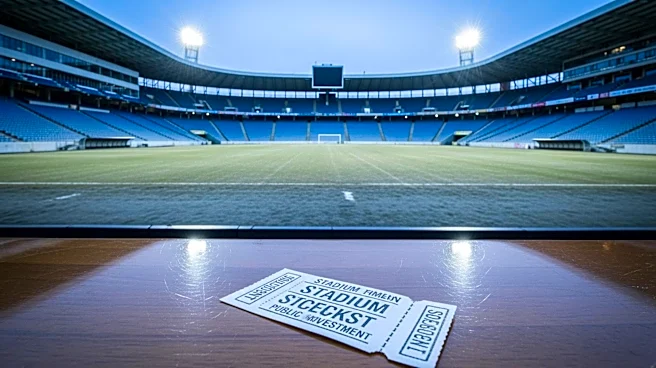
The Washington Commanders are set to return to RFK Stadium, a move that is expected to boost investment and job creation in Ward 7. However, the financial burden of the redevelopment plan has raised concerns among D.C. taxpayers. The Washington Metropolitan
Area Transit Authority's proposal for a new Metro station at the RFK site is estimated to cost around $1 billion, a figure deemed unfeasible before the stadium's 2030 opening. Instead, a less costly plan to upgrade the Stadium-Armory Metro stop and introduce a 'Gold Line' bus service is being considered, with an estimated cost of $300 million to $400 million. The proposal places the financial responsibility on the District, prompting calls for a thorough review of the cost estimates and funding strategies.
Why It's Important?
The redevelopment of RFK Stadium is not just a local issue but a regional one, as it will serve residents from Virginia and Maryland, as well as federal employees and tourists. The financial implications for D.C. taxpayers are significant, as they may bear the brunt of the costs for infrastructure improvements that benefit a wider audience. The situation highlights the broader issue of inflated transit construction costs in the U.S., which are often driven by fragmented project management and bureaucratic inefficiencies. The Commanders' return to the stadium could bring economic benefits, but it also underscores the need for equitable cost-sharing among all beneficiaries, including the team itself.
What's Next?
As the plan moves forward, D.C. leaders are urged to demand independent scrutiny of the cost estimates and explore funding models that involve contributions from all stakeholders, including the Commanders. The situation calls for political will and negotiation to ensure that the financial burden is distributed fairly. The outcome of these discussions will determine the feasibility and sustainability of the stadium redevelopment project.