






What's Happening?
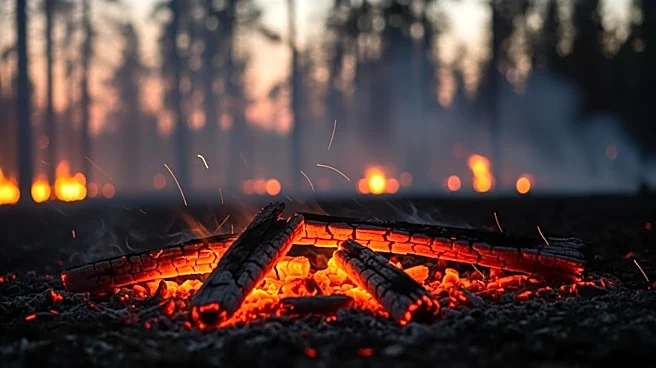
A recent study has found that wildfires in North America are burning longer due to climate change, with flames lasting later into the night and starting earlier in the morning. This phenomenon is attributed to human-caused climate change, which is extending
the hotter and drier conditions that fuel fires. Historically, wildfires would die down at night as temperatures dropped and humidity increased, but this is happening less frequently. The study, published in Science Advances, indicates that the number of hours when the weather is favorable for wildfires has increased by 36% over the past 50 years. Regions such as California have seen a significant rise in potential burning hours, with parts of southwestern New Mexico and central Arizona experiencing up to 2,000 more hours annually. The study highlights that the number of days with fire-prone weather has increased by 44%, effectively adding 26 days over the past half-century.
Why It's Important?
The extension of wildfire burning hours due to climate change has significant implications for firefighting efforts and public safety. Fires that continue to burn through the night gain a running start the next day, making them harder to control. This poses challenges for firefighters, who face increased risks and difficulties in nighttime operations. The study underscores the broader impact of climate change on fire-prone environments across North America, highlighting the need for adaptive strategies in fire management and prevention. As nights warm faster than days, the lack of humidity recovery exacerbates fire conditions, stressing vegetation and increasing fuel loads. This trend is a stark reminder of the ongoing influence of climate change on natural disasters, necessitating urgent action to mitigate its effects.
What's Next?
The study suggests that as Earth's atmosphere continues to warm, the conditions for wildfires will likely worsen. This calls for enhanced fire management strategies and increased investment in firefighting resources to address the growing threat. Policymakers and environmental agencies may need to implement stricter regulations and develop comprehensive plans to reduce greenhouse gas emissions and mitigate climate change impacts. Additionally, communities in fire-prone areas may need to adopt more resilient infrastructure and emergency preparedness measures to safeguard against the increasing frequency and intensity of wildfires.
Beyond the Headlines
The findings of the study highlight the ethical and environmental dimensions of climate change, emphasizing the need for global cooperation to address its root causes. The increased wildfire activity not only threatens human lives and property but also has profound ecological consequences, disrupting habitats and biodiversity. The study serves as a call to action for governments, businesses, and individuals to prioritize sustainable practices and reduce carbon footprints. Long-term shifts in climate patterns could lead to more severe weather events, necessitating a reevaluation of current policies and practices to ensure a sustainable future.