
What's Happening?
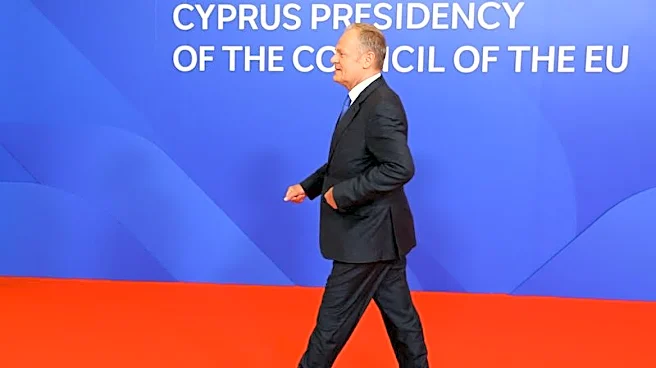
EU leaders have agreed to develop a blueprint for utilizing the EU's mutual assistance clause in response to foreign attacks, as President Trump intensifies his criticism of NATO. The European Commission
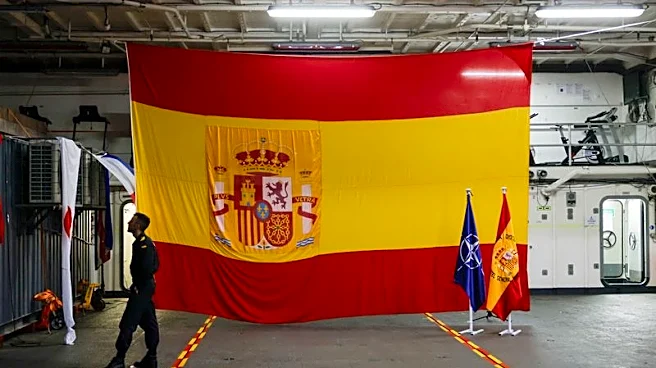
will prepare a plan detailing how the EU will respond if the mutual assistance clause, Article 42.7 of the EU treaty, is triggered. This clause obligates member states to provide aid and assistance if a fellow country is attacked. The discussions come amid reports that the U.S. is considering suspending Spain from NATO due to its stance on the U.S.-Israeli war on Iran. President Trump has expressed dissatisfaction with NATO, suggesting a potential U.S. withdrawal from the alliance. The EU's mutual assistance clause is seen as complementary to NATO's collective defense, offering additional tools such as sanctions and humanitarian aid.
Why It's Important?
The development of a mutual assistance blueprint by the EU signifies a strategic move to ensure collective security within the bloc, especially as tensions rise with the U.S. over NATO's role. This initiative highlights the EU's desire to strengthen its defense capabilities independently of NATO, potentially reshaping the security landscape in Europe. The move could lead to increased cooperation among EU member states in defense matters, reducing reliance on NATO. However, it also raises concerns about the potential weakening of NATO's collective defense principle, which has been a cornerstone of transatlantic security. The EU's actions may prompt other regions to consider similar measures, influencing global defense strategies.
What's Next?
EU leaders are expected to finalize the blueprint for the mutual assistance clause, detailing specific actions and responsibilities for member states. This may involve tabletop exercises to explore different scenarios and ensure readiness. The EU will likely continue to engage in diplomatic discussions with the U.S. to address concerns over NATO's future. The outcome of these discussions could impact the EU's defense policies and its relationship with NATO. Additionally, the EU may seek to enhance its defense capabilities through increased intelligence sharing and counter-terrorism cooperation among member states.