





What's Happening?
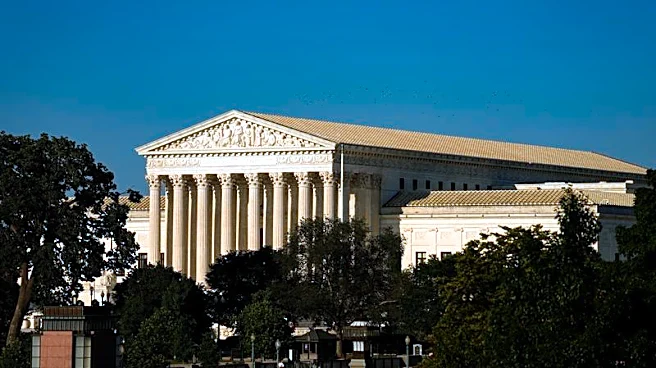
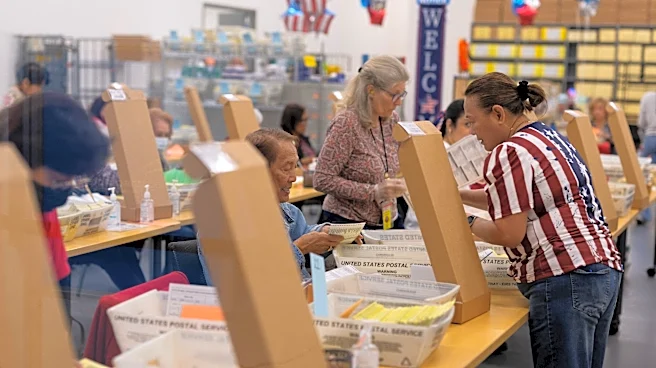
A group of Republican-led states, along with the Department of Justice, has appealed to the U.S. Supreme Court to allow President Trump's executive order on mail voting to proceed. The order, issued in March 2026, directs the U.S. Postal Service (USPS)
to only deliver mail ballots to voters on state-provided lists of eligible citizens. This move has been challenged by 23 Democratic states, leading to a legal battle. The 1st Circuit Court of Appeals recently upheld a lower court's decision to block the order, citing potential harm to states. Justice Ketanji Brown Jackson has asked the challenging states to respond by August 3. The order also involves the Department of Homeland Security and the Social Security Administration in compiling citizenship lists for states.
Why It's Important?
The outcome of this legal battle could significantly impact the administration of mail-in voting in the upcoming midterm elections. If the Supreme Court allows the order to proceed, it could lead to changes in how mail ballots are handled, potentially affecting voter turnout and election results. The order has raised concerns about federal overreach into state-controlled election processes, as the U.S. Constitution grants states the primary responsibility for conducting elections. The decision could set a precedent for federal involvement in election procedures, influencing future policies and legal interpretations.
What's Next?
The Supreme Court's decision will be crucial in determining whether the executive order can be implemented before the midterm elections. If the court allows the order to proceed, states will need to quickly adapt their election procedures, which could lead to logistical challenges and potential voter confusion. The decision may also prompt further legal challenges and political debates over the balance of power between federal and state governments in election administration.