

What's Happening?
The United States Senate has blocked a legislative proposal intended to fund the Department of Homeland Security (DHS) beyond an impending deadline, as Democrats demand reforms to the Trump administration's immigration policies. The vote, which ended 52-47,
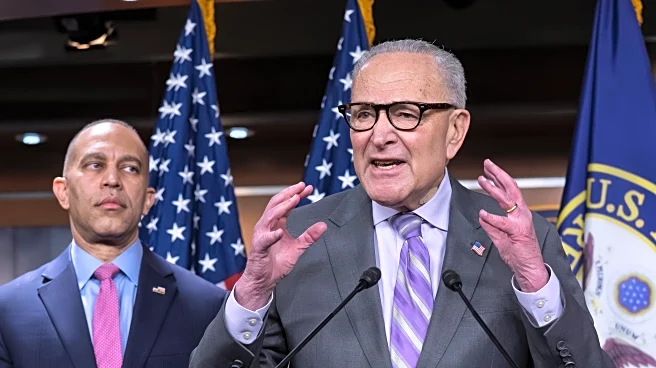
fell short of the 60 votes required to advance the bill, potentially leading to a shutdown of nonessential DHS operations if funding expires. Democrats have insisted on reforms to curb what they describe as excessive immigration enforcement, following public outcry over the deaths of two U.S. citizens during recent immigration operations. Senate Democratic Leader Chuck Schumer criticized the lack of reforms, suggesting that continued funding without changes would endorse a 'rogue police force.' Meanwhile, Republican Senator John Thune argued that the blocked legislation included oversight measures and funding for body cameras and de-escalation training. The proposed funding, amounting to $64.4 billion, was intended to cover various DHS functions, including immigration enforcement, airport security, and disaster response.
Why It's Important?
The Senate's decision to block DHS funding highlights the ongoing political struggle over immigration policy in the United States. The potential shutdown of DHS operations could disrupt critical services, including airport security and disaster response, affecting national security and public safety. The impasse underscores the deep divisions between Democrats and Republicans on immigration enforcement, with Democrats pushing for reforms to address concerns over civil liberties and human rights. The situation also reflects broader tensions within U.S. politics regarding the balance between security measures and individual freedoms. The outcome of this legislative standoff could set a precedent for future negotiations on immigration policy and government funding.
What's Next?
If Congress does not act before the funding deadline, DHS will be forced to shut down nonessential operations, although the real-world impact may be limited as most employees are deemed essential. Congress is expected to begin a 10-day recess, returning just before President Trump delivers his State of the Union address. The upcoming recess and the State of the Union may influence the urgency and direction of further negotiations. Stakeholders, including political leaders and civil society groups, are likely to continue advocating for their respective positions on immigration reform, potentially leading to renewed legislative efforts or executive actions.