
What's Happening?
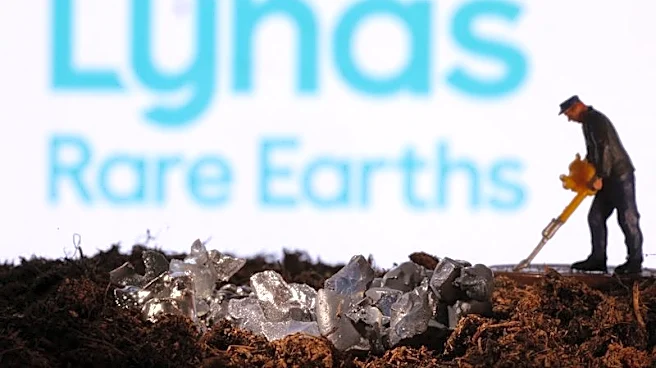
The Group of Seven (G7) countries are in discussions to create a permanent secretariat to oversee initiatives aimed at increasing the supply of critical minerals. This move is part of a broader effort
to reduce reliance on China, which currently dominates the production of essential minerals used in defense, energy transition, and manufacturing. The United States and the European Union have recently agreed to enhance coordination on critical minerals like lithium, cobalt, and rare earths. However, there is debate within Europe about the management of mineral stockpiles, with some countries preferring to maintain individual reserves rather than a shared stockpile. The proposed secretariat could be based in Paris and may help implement decisions made at the upcoming G7 leaders' meeting in June.
Why It's Important?
The establishment of a permanent unit to manage critical minerals is significant as it reflects the strategic importance of these resources in global supply chains. As countries transition to renewable energy and advanced technologies, the demand for critical minerals is expected to rise. By reducing dependency on China, G7 nations aim to secure their supply chains and enhance economic resilience. This initiative could also lead to increased collaboration among G7 members and potentially influence global mineral markets. The move underscores the geopolitical dimensions of resource management and the need for coordinated international efforts to ensure sustainable and secure access to critical minerals.
What's Next?
The G7 leaders are expected to discuss the critical minerals agenda at their mid-June summit in Evian, France. The establishment of the secretariat could be a key outcome of these discussions, potentially leading to new policies on mineral stockpiling and supply chain management. The International Energy Agency (IEA) is already working on plans to align stockpiling and production strategies, which could be integrated into the G7's approach. The outcome of these talks may influence future international agreements and partnerships related to critical minerals.