







What's Happening?
U.S. Senators Roger Wicker (R-Miss.) and Cindy Hyde-Smith (R-Miss.), alongside U.S. Representatives Bennie Thompson (D-Miss.), Trent Kelly (R-Miss.), Michael Guest (R-Miss.), and Mike Ezell (R-Miss.), have announced that Key Field in Meridian, Mississippi,
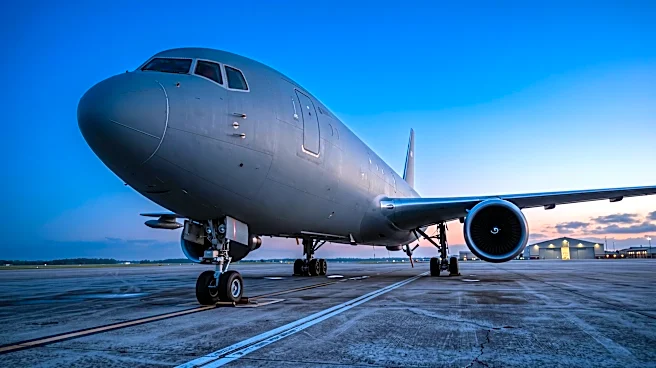
has been selected by the U.S. Air Force as one of four preferred locations to host the new KC-46 aircraft. The congressional delegation issued a joint statement commending the Air Force's decision, highlighting Key Field's strategic advantages. Key Field is currently home to the 186th Air Refueling Wing, which includes over 1,000 Airmen and Air Force personnel who service the KC-135. This unit is the primary National Guard tanker unit supporting U.S. military operations in the Middle East. The delegation emphasized Meridian's strategic location near important refueling tracks and Mississippi’s extensive open spaces, which are conducive to large-scale exercises. They also noted the significant infrastructure upgrades made at Key Field by its leadership and the city of Meridian's history of supporting military families. The Mississippi delegation has consistently advocated for Key Field, including sending a letter to Air Force Secretary Troy Meink in support of Meridian and backing efforts to modernize the base's infrastructure.
Why It's Important?
The selection of Key Field as a finalist for the KC-46 aircraft has significant implications for national security and the local economy in Meridian, Mississippi. Hosting the KC-46, a next-generation air refueling tanker, would enhance the U.S. Air Force's operational capabilities, particularly for global refueling missions. For Mississippi, this decision could bring substantial economic benefits through job creation, increased investment in local infrastructure, and continued federal funding for the base. The 186th Air Refueling Wing's existing role in supporting Middle East operations underscores the strategic importance of Key Field, and the KC-46 would further solidify its critical function in national defense. This development also highlights the effectiveness of bipartisan congressional advocacy, as the entire Mississippi delegation worked together to champion Key Field's selection. The potential for Meridian to become a key hub for air refueling operations could lead to long-term growth and stability for the region, benefiting local businesses and residents.
What's Next?
The U.S. Air Force will proceed with its final evaluations to determine the ultimate home for the KC-46 aircraft among the four preferred locations. The Mississippi congressional delegation has pledged to continue advocating for Key Field, making the case that it is the most suitable choice for the next generation of air refueling. This ongoing advocacy will likely involve further engagement with Air Force officials and potentially highlighting additional benefits and capabilities of Key Field. Should Key Field be ultimately selected, it would trigger a new phase of planning and investment for the base, including potential construction, personnel transfers, and integration of the new aircraft. The decision will also influence future defense spending and resource allocation within the Air Force, impacting other bases that were not selected. The outcome will be closely watched by local communities, defense contractors, and national security stakeholders.
Beyond the Headlines
The selection process for military installations like Key Field often involves a complex interplay of strategic defense needs, economic considerations, and political advocacy. Beyond the immediate benefits of hosting the KC-46, this decision reflects a broader trend of modernizing military infrastructure to meet evolving global threats. The emphasis on Key Field's strategic location and existing infrastructure highlights the importance of readiness and efficiency in military operations. Furthermore, the bipartisan support from the Mississippi delegation underscores the shared interest across political lines in securing federal investments and strengthening national defense capabilities within their states. This process also touches upon the delicate balance between military requirements and community impact, as host cities like Meridian must adapt to the demands and opportunities presented by a major military presence. The long-term implications extend to technological advancements in air refueling, regional economic development, and the continued role of the National Guard in national and international missions.