





What's Happening?
Charlotte City Council member Kimberly Owens has proclaimed the spring (March-May) and fall (September-November) seasons as 'Bird Safe Awareness Months.' This initiative encourages residents and businesses in Mecklenburg County to turn off nonessential
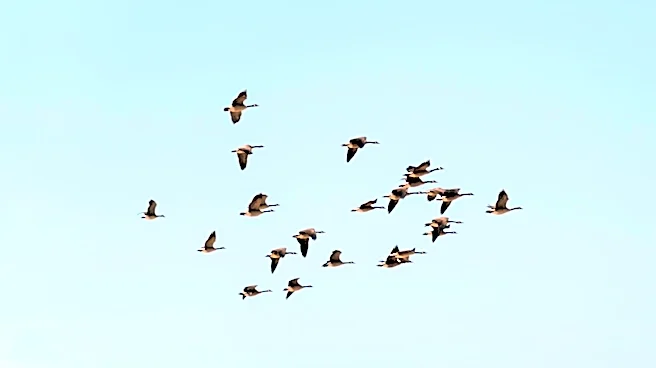
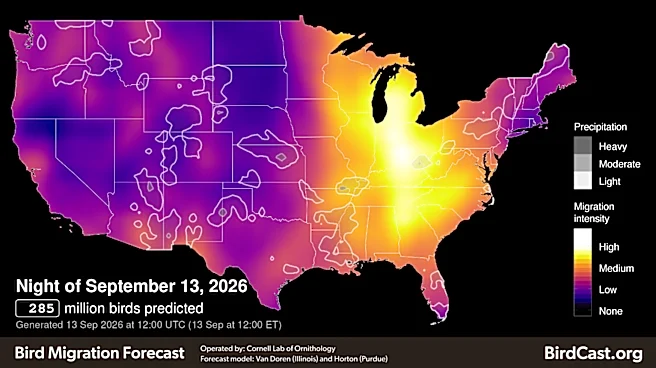
lights between 11 p.m. and 6 a.m. to protect migratory birds. Mary Claire Wall, a volunteer with Wing Haven Bird Sanctuary, explained that 80% of birds migrate at night, and bright, upward-facing lights disorient their biological navigation systems, leading to collisions with buildings. Up to a billion birds die annually in the United States from such collisions. Birdcast's migration dashboard reported over 3 million birds flying over Mecklenburg County on Monday night alone, with avian traffic peaking at nearly half a million birds around 11 p.m. The U.S. Fish and Wildlife Service also recommends using warm, downward-facing lights, closing curtains, and avoiding blue lights.
Why It's Important?
The proclamation of 'Bird Safe Awareness Months' in Charlotte is a significant step in addressing the critical issue of bird mortality due to light pollution. With up to a billion birds dying from building collisions annually in the U.S., this initiative highlights a widespread environmental crisis that often goes unnoticed. Migratory birds play a vital role in ecosystems, contributing to pest control, pollination, and seed dispersal. Their decline can have cascading effects on biodiversity and ecological balance. By encouraging simple actions like dimming or turning off lights, Charlotte is setting a precedent for urban areas to actively participate in conservation efforts. This local action can raise broader public awareness about the impact of human infrastructure on wildlife and inspire similar initiatives in other cities, contributing to a larger national effort to protect avian populations.
What's Next?
The immediate next step for Charlotte is to promote widespread adherence to the 'Bird Safe Awareness Months' guidelines among its residents and businesses. This will involve public education campaigns to inform the community about the importance of reducing light pollution during migration seasons. Success will depend on voluntary compliance, though future discussions could explore incentives or regulations for commercial buildings. Conservation groups like Wing Haven Bird Sanctuary and Mecklenburg Audubon will likely continue to monitor bird migration patterns and collision rates to assess the effectiveness of the initiative. Other U.S. cities facing similar challenges with migratory bird populations may look to Charlotte's program as a model for implementing their own light pollution reduction strategies, potentially leading to a more coordinated national effort.
Beyond the Headlines
The 'Bird Safe Awareness Months' initiative touches upon the broader ethical responsibility of urban development to coexist harmoniously with natural ecosystems. It underscores how seemingly minor human activities, like leaving lights on, can have profound and devastating consequences for wildlife. This effort also highlights the power of local government and community activism in driving environmental change. Beyond the immediate goal of saving birds, this initiative could foster a greater sense of environmental stewardship within the community, encouraging residents to consider other ways their daily lives impact local wildlife and the environment. It also implicitly calls for architects and urban planners to design buildings with bird safety in mind, integrating features that minimize light spill and reflective surfaces, thereby promoting a more sustainable and wildlife-friendly urban landscape.