




What's Happening?
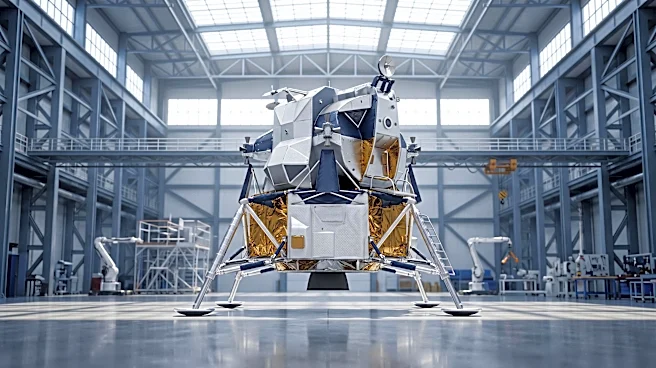
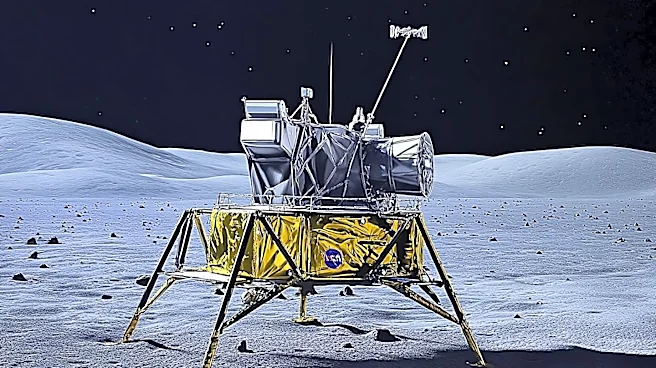
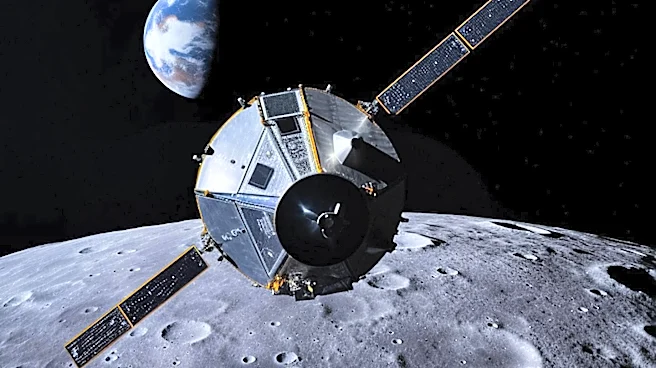
NASA's Blue Ghost lunar lander mission, part of the Commercial Lunar Payload Services (CLPS) initiative, is set to launch in early 2026. The mission involves the Blue Ghost lander, the Elytra Dark orbital vehicle, and the Lunar Surface Electromagnetic
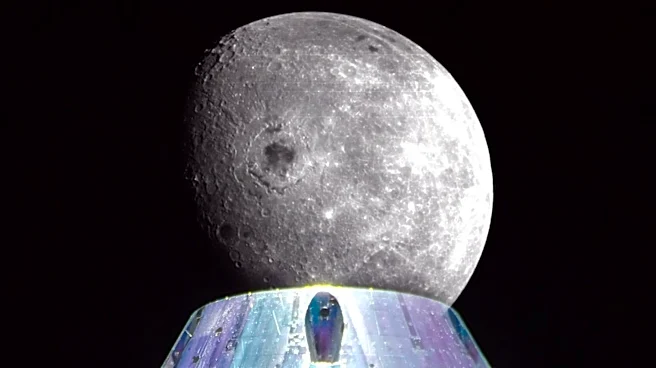
Explorer Night system (LuSEE Night). The Elytra Dark will transport the Blue Ghost lander to the Moon, where it will land on the lunar far side. Upon landing, the Blue Ghost will deploy LuSEE Night, which consists of four monopole antennas forming a low-frequency radio telescope designed to operate between 0.1 and 50 MHz. The LuSEE Night system is a 1m x 1m x 70cm cube mounted on the lander, equipped with a motor-driven rotating platform to adjust antenna orientation. After deployment and commissioning, the lander will cease operations by the first nightfall, allowing LuSEE Night to function independently with its own power and communication systems to prevent interference. The mission aims to observe the radio sky at low frequencies and evaluate the far side of the Moon as a radio-quiet environment.
Why It's Important?
This mission is significant for several reasons. By deploying a low-frequency radio telescope on the far side of the Moon, LuSEE Night will leverage the Moon's natural shielding from Earth's radio interference, providing an unprecedented view of the universe at frequencies largely obscured from Earth. This will enable scientists to measure the low-frequency foreground of the universe, potentially offering insights into the early universe and cosmic dawn. Furthermore, the mission will test hypotheses regarding the late heavy bombardment of the Moon and the timing of major planetary rearrangements that may have coincided with the beginning of life on Earth. The independent operation of LuSEE Night after lander shutdown highlights an advanced approach to scientific data collection, minimizing potential contamination from spacecraft systems. This mission also underscores the growing role of commercial partners like Firefly in NASA's lunar exploration efforts through the CLPS initiative, fostering innovation and potentially reducing costs for space missions.
What's Next?
The Blue Ghost mission is scheduled for launch in late 2025 to early 2026, alongside the ESA Lunar Trailblazer. Following its successful landing on the lunar far side, the immediate next steps will involve the deployment and commissioning of the LuSEE Night system. Once LuSEE Night is operational, the Blue Ghost lander will power down to ensure a radio-quiet environment for the sensitive measurements. LuSEE Night will then begin its independent operations, charging its battery during the lunar day, uploading data, and conducting communications, while performing its primary scientific observations during the lunar night. Data collected by LuSEE Night will be transmitted via its own S-band uplink/downlink communications to the European Space Agency Lunar Pathfinder communications relay satellite. Future analysis of this data by scientists will be crucial for advancing our understanding of the early universe and the Moon's geological history.
Beyond the Headlines
The Blue Ghost mission represents a critical step in establishing the Moon's far side as a premier location for radio astronomy. The success of LuSEE Night could pave the way for larger, more complex lunar-based observatories that could revolutionize our understanding of cosmology. The mission's focus on measuring the low-frequency radio sky touches upon fundamental questions about the universe's origins, including the period before the first stars formed. Ethically, utilizing the Moon's far side as a radio-quiet zone emphasizes the importance of preserving such unique environments for scientific research, potentially leading to international discussions on lunar resource management and scientific zoning. The reliance on commercial partners like Firefly also signifies a broader shift in space exploration, where private industry plays an increasingly vital role in executing complex scientific missions, potentially accelerating the pace of discovery and making space more accessible for diverse research objectives.