







What's Happening?
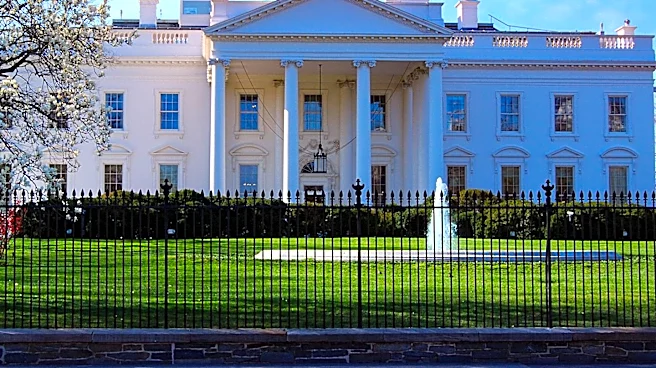
The White House's proposed rule to give political appointees significant control over federal grant-making has sparked widespread opposition from higher education associations, public health organizations, and other groups. Critics argue that the rule undermines
scientific peer review and could allow political influence over which scientific projects receive funding. The proposal has received over 300,000 comments, with many calling for an extension of the comment period. Senate Appropriations Committee Chair Susan Collins has criticized the rule, stating it could undermine scientific research and disincentivize researchers from seeking federal assistance. The rule would allow the administration to cancel already-awarded funding for projects, a move that has been reversed by judges in the past. Legal organizations like Democracy Forward are preparing for litigation against the rule, citing potential legal challenges under the Administrative Procedure Act.
Why It's Important?
The proposed rule could have significant implications for the U.S. research landscape, potentially altering the balance of power between scientific institutions and political appointees. By allowing political influence over grant decisions, the rule could destabilize long-term research projects and discourage scientific innovation. This could impact the U.S.'s global standing in scientific research and innovation, as well as affect the economic and social benefits derived from scientific advancements. The rule's potential to politicize science funding decisions could lead to a chilling effect on research proposals, particularly in fields that may not align with the current administration's priorities. This could result in a loss of valuable scientific and medical advancements, affecting public health and technological progress.
What's Next?
As the comment period closes, opponents of the rule are gearing up for legal battles. Organizations like Democracy Forward and Lawyers for Good Government are preparing to challenge the rule in court, arguing that it exceeds the administration's statutory authority. The White House Office of Management and Budget aims to implement the new grant rules by October 1, but the legal challenges could delay or alter the rule's implementation. The outcome of these legal battles could set a precedent for future administrations, influencing how federal grant-making is managed and potentially reshaping the relationship between the government and scientific institutions.
Beyond the Headlines
The proposed rule raises broader questions about the role of political influence in scientific research and the potential for partisan interests to shape scientific agendas. The rule could lead to increased scrutiny of how federal funds are allocated and the criteria used to determine funding priorities. This could prompt a reevaluation of the principles guiding federal research funding, emphasizing the need for transparency and accountability in grant-making processes. The debate over the rule also highlights the ongoing tension between scientific autonomy and political oversight, a dynamic that could have long-term implications for the integrity and independence of scientific research in the U.S.