






What's Happening?
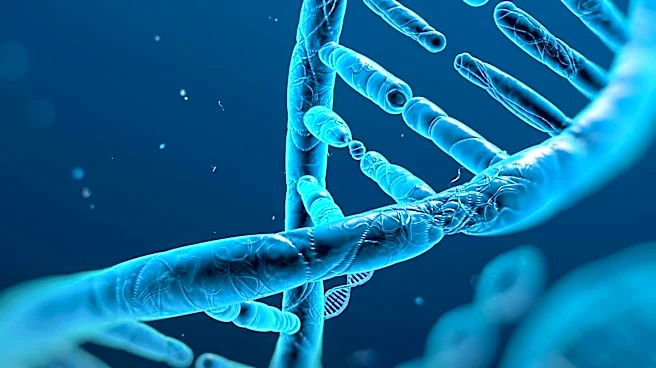
Researchers have developed a novel approach utilizing synthetic DNA molecules to directly target cancer-linked genes, opening new avenues for treatments, diagnostics, and biological research. This method addresses a long-standing challenge in genetic
medicine: precisely targeting specific DNA sections within cells. Unlike many modern genetic medicines that target RNA, this new technique focuses on DNA itself. Dr. David Rusling, Associate Professor in Bioengineering, led the team that designed triplex-forming oligonucleotides (TFOs), which are synthetic DNA pieces engineered to recognize and attach to specific DNA sequences. This allows for the targeting of individual genes while leaving the rest of the genome untouched. A key innovation was incorporating a commercially available synthetic DNA base, Z, to enhance binding strength and selectivity, particularly in difficult-to-target GC-rich regions of DNA that are crucial for gene activity.
Why It's Important?
This breakthrough offers a more precise way to control gene activity, potentially revolutionizing cancer treatment. By targeting DNA directly, researchers are working at the very start of the biological process, offering a highly efficient method to influence gene behavior. The ability to specifically target genes like MYC, known to drive many cancers, and reduce their activity by 50 to 80 percent in laboratory experiments, demonstrates significant therapeutic potential. This approach outperforms previous methods and unmodified DNA, indicating a substantial leap forward. Furthermore, the use of commercially available modified bases makes this technology accessible to a wider range of researchers, accelerating progress in DNA-targeting therapies. This accessibility could foster rapid advancements in understanding and treating genetic disorders and cancer.
What's Next?
While further research is necessary before this technology can be applied in patients, the study establishes a powerful new method for precise gene targeting and regulation. The next steps will likely involve extensive preclinical testing to evaluate safety and efficacy in more complex biological systems, followed by clinical trials. Beyond therapeutic applications, this technology could become an invaluable research tool, allowing scientists to temporarily switch off individual genes to study cellular responses, thereby deepening the understanding of cancer biology and genetic disorders. The system's reliance on DNA sequence recognition suggests it could be adapted to target numerous different genes by simply altering the synthetic DNA molecule's sequence, promising broad applicability in future genetic medicine.
Beyond the Headlines
This development signifies a fundamental shift in how genetic diseases, particularly cancer, might be approached. By directly manipulating DNA, the technology moves beyond symptomatic treatments to address the root cause of genetic dysregulation. It highlights the increasing sophistication of genetic engineering and the potential for highly personalized medicine. The ethical implications of such precise genetic control will also become more prominent as the technology advances, necessitating careful consideration of its responsible application. Furthermore, the ease of access to the modified bases could democratize genetic research, allowing more laboratories to contribute to breakthroughs. This could lead to a rapid expansion of knowledge in gene function and disease mechanisms, potentially unlocking cures for conditions previously deemed untreatable.