









What's Happening?
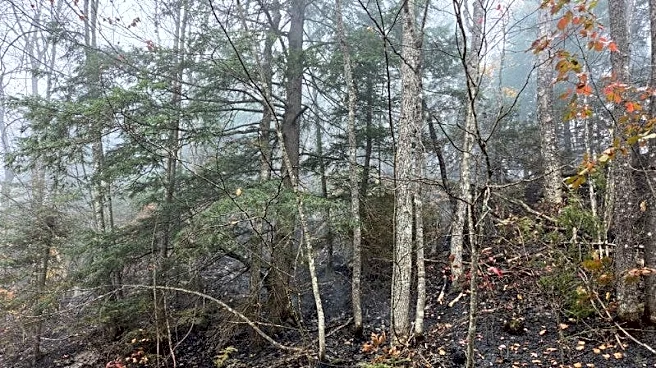
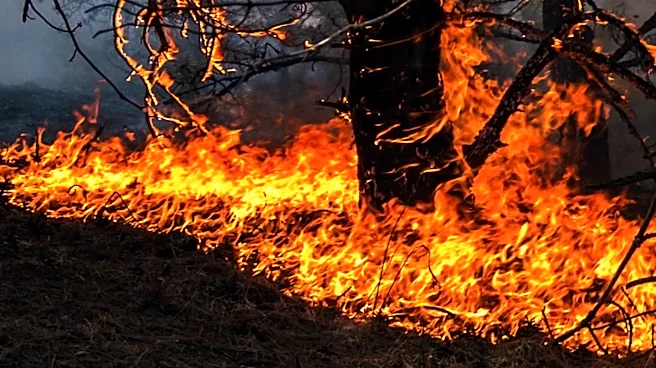
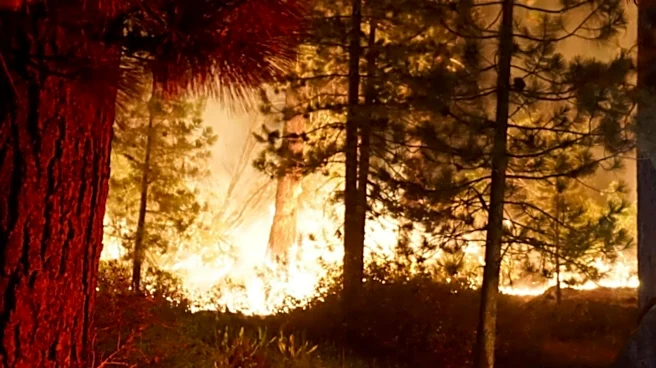
More than 80% of the wildfires responded to by the Idaho Department of Lands this year have been caused by humans, as reported by Director Dustin Miller to an interim committee of Idaho legislators. As of the end of September, approximately 10,000 acres
of land under the department's protection have burned. This figure does not include federal lands. Miller emphasized the critical need for robust fuels mitigation and prevention programs to address this issue. The state actively investigates the cause of every fire and seeks to recover costs from individuals or groups found to be negligent. The causes of these human-ignited fires range from uncontrolled debris burning and sparks from metal equipment to discarded cigarette butts and improperly extinguished campfires. This trend of human-caused fires is not new, with a similar spike reported in 2023.
Why It's Important?
The high percentage of human-caused wildfires in Idaho carries significant implications for the state's environment, economy, and public safety. Financially, the state's wildfire costs exceeded $47 million by the end of September, with only an estimated $19.8 million potentially reimbursable from partner agencies. While the state's wildfire suppression fund maintained a positive balance this year due to a $32 million infusion from the Idaho Legislature, the long-term financial burden of these preventable fires is substantial. Beyond monetary costs, wildfires threaten the lives of firefighters and residents, destroy private property, and damage state endowment timber lands, which are crucial for funding public schools and other beneficiaries. The environmental impact includes long-term ecological damage and the need for extensive rehabilitation and recovery efforts. The repeated occurrence of human-caused fires highlights a persistent challenge in public awareness and adherence to fire safety regulations.
What's Next?
The Idaho Department of Lands is currently calculating a wildfire funding estimate for the upcoming year, which will inform future budgetary allocations for prevention and suppression efforts. Legislators, including Senate Majority Leader Lori Den Hartog and Natural Resources Interim Committee Co-Chair Britt Raybould, have expressed interest in exploring stronger measures to hold negligent parties accountable and potentially implement more stringent penalties to deter future human-caused fires. The state will continue its practice of investigating fire origins and attempting to recoup suppression costs, though Miller noted that full recovery is not always achieved and often involves settling for less than the total cost. Continued public education campaigns on fire safety and responsible land use are likely to be a focus to reduce the incidence of preventable wildfires.
Beyond the Headlines
The prevalence of human-caused wildfires in Idaho underscores a broader societal challenge concerning individual responsibility and environmental stewardship. The discussion around stronger penalties and cost recovery raises ethical questions about the balance between punitive measures and public education. While the state aims to recoup funds from negligent parties, the process can be lengthy and often results in partial recovery, effectively shifting some of the financial burden to taxpayers. This situation highlights the complex interplay between human activity, natural resource management, and public policy. The long-term ecological consequences, such as habitat destruction and altered ecosystems, extend beyond immediate financial and safety concerns, impacting biodiversity and the overall health of Idaho's natural landscapes for generations. The repeated nature of these incidents suggests a need for a more comprehensive approach that integrates education, enforcement, and community engagement to foster a culture of fire prevention.