


What's Happening?
A team of researchers from the University of Florida, led by virologist John Lednicky, Ph.D., and mechanical/biomedical engineer Z. Hugh Fan, Ph.D., has developed an inexpensive, rapid, and accurate handheld device capable of detecting seven mosquito-borne
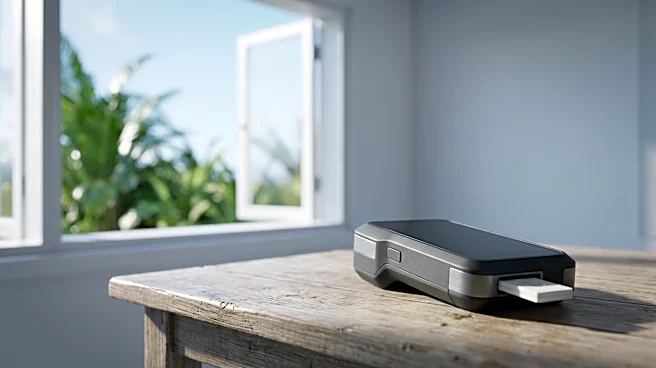
illnesses. This device is designed for use in low-resource or remote settings, such as rural clinics in Haiti or by farm animal veterinarians, eliminating the need for a power supply, bulky equipment, or extensive training. The technology, detailed in the journal Analytical Chemistry, builds upon previous work that developed rapid tests for Zika virus and later distinguished between influenza and SARS-CoV-2 during the COVID-19 pandemic. The current iteration, funded by the National Institutes of Health, targets Zika, chikungunya, Mayaro, and four types of dengue viruses, which are prevalent in Haiti, other Caribbean nations, and many countries in the Americas. The device has been validated with human samples and performs comparably to the gold-standard RT-PCR test.
Why It's Important?
The development of this portable diagnostic device is crucial for public health, particularly in regions where access to advanced laboratory testing is limited. Mosquito-borne diseases often present with similar symptoms like fever, joint pain, fatigue, and rash, making accurate and timely diagnosis challenging without proper tools. Each viral infection, however, requires different clinical management, making differentiation critical for effective treatment and disease control. This device addresses a significant gap by providing a point-of-care solution that can rapidly distinguish between multiple viruses. Its cost-effectiveness and simplicity mean that clinicians in underserved areas can make informed diagnostic decisions quickly, potentially leading to faster patient treatment and better containment of outbreaks. The ability to detect tiny amounts of genetic material from viruses using RT-LAMP technology, which operates at a single temperature and provides results within 30 minutes to an hour, significantly reduces the turnaround time compared to traditional PCR tests, which can take one to two days.
What's Next?
The University of Florida team is actively seeking patents for their innovative technology. Their immediate next steps involve integrating the various components of the device to enhance user-friendliness and further reduce manufacturing costs. While the current design utilizes a commercially available USB-rechargeable coffee mug for temperature control, which costs between $60 and $100, the researchers aim to make the device even more affordable for resource-strapped regions, including areas in Southeast Asia and South America where mosquito-borne illnesses are highly prevalent. Beyond its current application, the researchers believe that with modifications to its chemical assays, the device could be adapted to test for a wide array of other viruses, bacteria, and pathogens in humans, animals, and environmental samples across diverse settings. This adaptability suggests a broad future potential for the technology in global health surveillance and rapid response to emerging infectious diseases.
Beyond the Headlines
This technological advancement has profound implications beyond immediate disease diagnosis. The device's design philosophy, emphasizing simplicity, cost-effectiveness, and portability, represents a significant shift towards democratizing access to critical diagnostic tools. By enabling rapid and accurate identification of pathogens in remote and underserved communities, it can help mitigate health disparities and strengthen global health security. The reliance on readily available and inexpensive components, such as a coffee mug and a blue light flashlight, highlights an innovative approach to problem-solving in resource-limited environments, potentially inspiring similar low-cost, high-impact solutions in other areas of healthcare. Furthermore, the ability to differentiate between multiple viral infections with similar symptoms can prevent misdiagnosis, reduce the inappropriate use of treatments, and improve patient outcomes, thereby fostering greater trust in healthcare systems in vulnerable populations. This approach could also empower local healthcare workers with advanced diagnostic capabilities, fostering self-sufficiency in disease management.