





What's Happening?
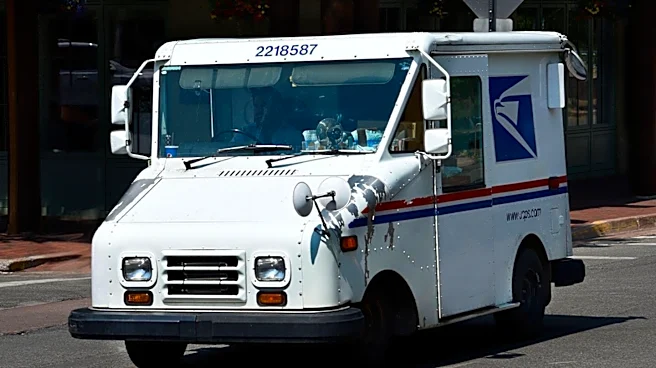
The Postal Service Reform Act of 2022 has introduced a significant change for most Medicare-eligible postal retirees. To maintain their Federal Employees Health Benefits (FEHB) coverage, these retirees are now required to enroll in Medicare Part B. This
new requirement, which began in 2025, has limited exceptions. Federal employees and retirees are urged to understand how FEHB and Medicare interact to optimize their coverage and manage costs effectively. While Medicare eligibility generally starts at age 65, enrollment in Part B was previously optional for most federal retirees. However, for the majority of Medicare-eligible postal retirees, it is now a mandatory step to continue their health benefits through the new Postal Service Health Benefits (PSHB) Program. This change aims to address long-standing financial issues within the postal service's health benefits system.
Why It's Important?
This mandate has substantial implications for the financial planning and healthcare access of thousands of postal retirees. By requiring enrollment in Medicare Part B, the Postal Service aims to shift some of the healthcare cost burden, potentially improving its financial stability. For retirees, this means an additional premium for Medicare Part B, which can vary based on income. While this might increase immediate out-of-pocket expenses, it also ensures comprehensive coverage, as Medicare typically becomes the primary payer and FEHB acts as secondary insurance, covering most remaining costs. Failure to enroll in Part B when required could lead to a loss of FEHB coverage, leaving retirees with potentially higher healthcare costs or limited options. This reform is a critical step in modernizing the postal service's benefits structure and ensuring its long-term viability, while also impacting the personal finances and healthcare decisions of its retired workforce.
What's Next?
Postal retirees who are Medicare-eligible and not yet enrolled in Part B must take action to ensure they comply with the new requirements to avoid losing their FEHB coverage. They should carefully review their specific eligibility rules and consider how this change impacts their overall healthcare strategy. The Postal Service Health Benefits (PSHB) Program, which commenced in 2025, will be the primary vehicle for their FEHB coverage, necessitating the Part B enrollment. Retirees will need to weigh the costs of Part B premiums against the benefits of maintaining comprehensive FEHB coverage. Additionally, they should explore options such as suspending FEHB if they enroll in a Medicare Advantage plan, Medicaid, or TRICARE for Life, as this preserves the right to re-enroll in FEHB later. Annual review of health coverage during Open Season will become even more crucial for these retirees to adapt to ongoing changes and optimize their benefits.
Beyond the Headlines
The Postal Service Reform Act of 2022 reflects a broader trend of re-evaluating and restructuring legacy benefit systems in large public sector organizations. The move to integrate Medicare Part B more directly into postal retiree health benefits highlights the ongoing challenge of balancing comprehensive employee benefits with financial sustainability. This reform could serve as a precedent or model for other federal agencies facing similar retirement funding shortfalls, potentially leading to wider discussions about how federal employee health benefits are structured in conjunction with Medicare. The ethical dimension involves ensuring that retirees, many of whom are on fixed incomes, are adequately informed and supported through these transitions, minimizing any unintended financial hardship. The long-term shift could lead to a more streamlined, albeit potentially more complex, healthcare landscape for federal retirees, emphasizing individual responsibility in navigating a hybrid system of federal and national health insurance programs.