





What's Happening?
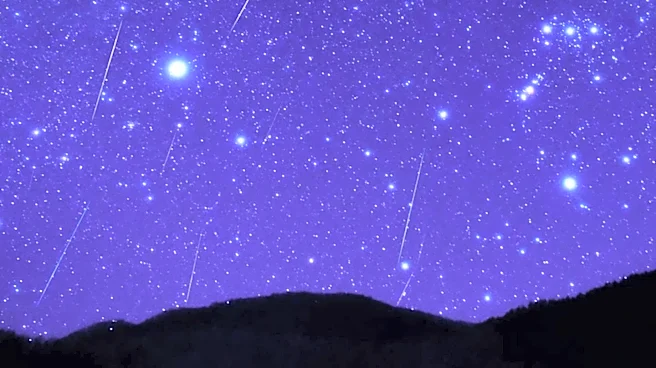
The Perseid meteor shower is set to dazzle skywatchers in the Northern Hemisphere with optimal viewing conditions. The peak of this annual celestial event will occur from Wednesday night into Thursday morning, coinciding with a total solar eclipse visible
across parts of Spain, Iceland, and Greenland. According to NASA, observers can expect to see between 50 to 100 meteors per hour under ideal conditions, while the American Meteor Society estimates 30 to 50 meteors per hour in rural areas. The Perseids are remnants from comet 109P/Swift-Tuttle, which orbits the sun every 133 years. This meteor shower is a favorite due to its bright fireballs and the warm summer nights that make viewing more comfortable. The new moon phase during the peak will enhance visibility by reducing moonlight interference.
Why It's Important?
The Perseid meteor shower is significant for both amateur and professional astronomers as it provides a reliable opportunity to observe meteors in large numbers. This event not only captivates the public's imagination but also serves as a reminder of the dynamic nature of our solar system. The shower's visibility during warm summer nights makes it accessible to a wide audience, fostering interest in astronomy and science. Additionally, the lack of moonlight during this year's peak enhances the viewing experience, potentially increasing public engagement and appreciation for celestial events. Such events can inspire educational initiatives and promote scientific literacy among the general population.
What's Next?
As the Perseid meteor shower reaches its peak, enthusiasts are encouraged to find locations away from city lights to maximize their viewing experience. The best time to observe the meteors will be between midnight and dawn when the constellation Perseus is high in the sky. Observers should allow their eyes to adjust to the darkness and avoid looking at bright screens to enhance their chances of spotting meteors. This event may also prompt discussions and educational programs about astronomy and the science behind meteor showers, potentially leading to increased interest in future celestial events.