



What's Happening?
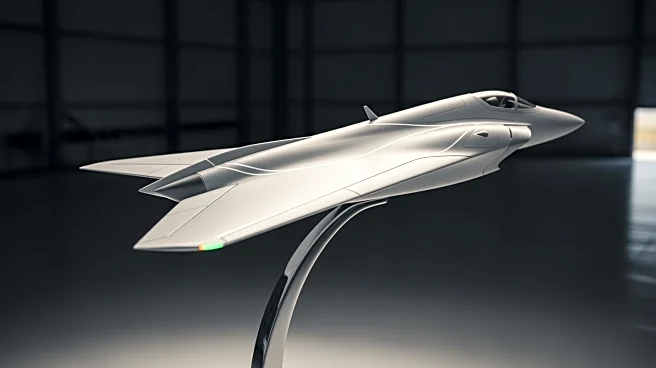
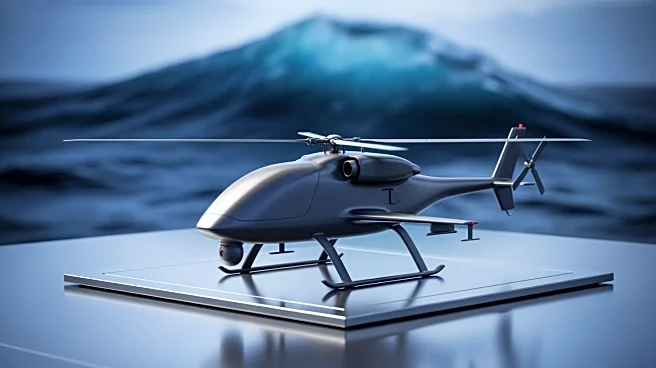
The UK Royal Navy has showcased its new unmanned helicopter, Proteus, designed for North Atlantic missions. Developed by Leonardo under a four-year £60 million program, Proteus represents a significant advancement in uncrewed aerial systems. The helicopter completed
its first flight from Predannack airfield in Cornwall, marking a milestone in the Royal Navy's efforts to integrate autonomous technology into its operations. This development comes amid rising geopolitical tensions in the North Atlantic, particularly over Greenland, where aggressive rhetoric from President Trump and increased Russian and Chinese activity have heightened concerns. Proteus is part of the Royal Navy's strategy to enhance its capabilities in anti-submarine warfare and other critical missions.
Why It's Important?
The introduction of Proteus highlights the growing importance of autonomous systems in modern military operations. Unmanned helicopters like Proteus can perform complex missions without risking human lives, offering strategic advantages in contested environments. This capability is crucial as tensions in the North Atlantic continue to rise, with NATO nations responding to perceived threats from Russia and China. The development of Proteus also reflects broader trends in military innovation, where digital technologies and artificial intelligence are increasingly used to enhance operational effectiveness. As countries invest in such technologies, the balance of power in military capabilities may shift, influencing global security dynamics.
What's Next?
The successful deployment of Proteus is likely to spur further investment in autonomous military technologies by the UK and other nations. The Royal Navy plans to integrate uncrewed systems into its future operations, potentially transforming its strategic approach to maritime security. As tensions in the North Atlantic persist, the role of autonomous systems in surveillance, reconnaissance, and combat operations will likely expand. Additionally, the development of Proteus may prompt other countries to accelerate their own unmanned aerial vehicle programs, leading to increased competition in military technology. The international community may also need to address regulatory and ethical considerations related to the use of autonomous systems in warfare.