





What's Happening?
California lawmakers are moving forward with Senate Bill 966, a union-backed proposal aimed at codifying existing oil refinery worker safety protections into state law. This effort comes in response to a legal settlement between state regulators and the
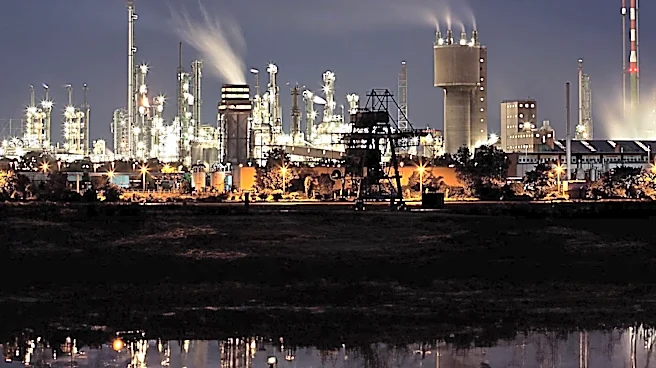
oil lobby, which is leading to revisions of current safety rules. The bill seeks to safeguard workers' rights to refuse dangerous tasks, participate in safety reviews, select their own safety representatives, and anonymously report hazards. This legislative push follows significant incidents, including a 2012 Chevron refinery fire in Richmond that led to 15,000 people seeking medical attention, and a recent explosion at Chevron’s El Segundo refinery. The Western States Petroleum Association (WSPA), representing the oil industry, opposes the bill, arguing it would undermine the 2024 legal settlement.
Why It's Important?
This legislative action is crucial for several reasons. Firstly, it highlights a direct conflict between worker safety advocates and the oil industry over regulatory control and the interpretation of safety standards. The bill's passage would ensure that worker protections, established after past refinery explosions, remain robust, potentially preventing future industrial accidents that could endanger lives and cause widespread environmental damage. Secondly, it underscores the influence of lobbying efforts, with WSPA being a major spender in the Capitol, and the political sensitivity of the oil and gas industry in California. The debate also reflects broader concerns about energy policy and consumer costs, as California drivers face the nation's highest gasoline prices. The outcome will set a precedent for how worker safety and environmental regulations are balanced against industry interests and legal agreements in a state heavily reliant on its refining capacity.
What's Next?
Senate Bill 966 has cleared a key fiscal committee and will continue through the legislative process. The bill's author, state Senator Lena Gonzalez, (D-Long Beach), will need to navigate continued opposition from the Western States Petroleum Association (WSPA) and the Governor's Department of Finance, which argues the bill would incur additional costs and potentially conflict with ongoing rule revisions stemming from the 2024 settlement. If passed by the legislature, the bill would then go to the Governor for approval. Stakeholders, including labor unions like the United Steelworkers and major refiners such as Chevron, Marathon Petroleum, and PBF Energy, will likely intensify their advocacy efforts. The ongoing process of rewriting refinery safety rules by the California Environmental Protection Agency and the state's workplace safety agency will also continue, potentially creating a complex regulatory landscape depending on the bill's fate.
Beyond the Headlines
The struggle over Senate Bill 966 reveals deeper implications regarding the balance of power between corporate interests, labor rights, and public safety in a critical industrial sector. The bill's attempt to enshrine worker protections into law, rather than leaving them to regulatory discretion, reflects a distrust in the efficacy of current regulatory processes, especially after the 2024 settlement with the oil industry. This situation could set a precedent for other industries where safety regulations are subject to legal challenges and revisions. Furthermore, the debate touches on the ethical responsibility of corporations to ensure worker and community safety, even when it impacts profitability. The long-term shift towards stricter oversight and greater transparency in industrial operations, as seen in other sectors, suggests that this legislative effort is part of a broader societal demand for accountability and protection against industrial hazards.