


What's Happening?
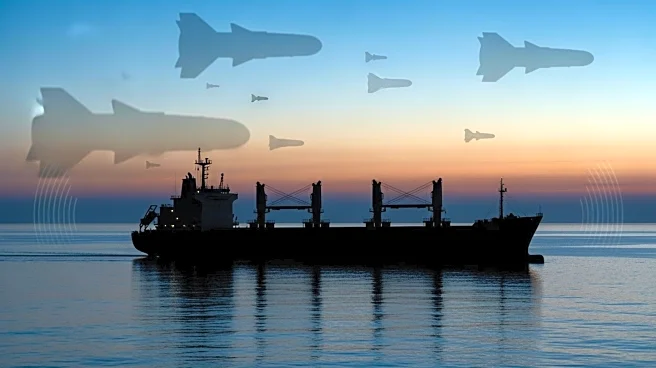
A U.S. special operations team recently intercepted a ship off the coast of Sri Lanka, confiscating part of its cargo, which included dual-use components manufactured in China. These components, such as spectrometers and gyroscopes, are capable of enhancing
the precision of guided missiles and were en route to Iran. The interception aligns with the U.S. Treasury's recent sanctions against a network of companies in China, Iran, Turkey, and the UAE involved in supplying components for Iranian ballistic missile and drone production. The intercepted ship, identified as the Panama-flagged bulk carrier Shun Kai Xing, was sanctioned for transporting equipment used in missile guidance systems. This action is part of broader efforts to enforce UN Security Resolution 1929, which mandates the inspection and seizure of vessels suspected of carrying prohibited cargo related to weapons systems.
Why It's Important?
The interception of the ship carrying missile components to Iran is significant as it underscores ongoing international efforts to curb Iran's missile capabilities, which have been used in attacks against U.S. and Israeli targets. By preventing these components from reaching Iran, the U.S. aims to mitigate the risk of further escalation in the region, which could lead to renewed conflict. The action also highlights the challenges of enforcing international sanctions and the complexities of global supply chains that facilitate the transfer of dual-use technologies. This development could impact diplomatic relations and security dynamics in the Middle East, as well as influence future U.S. foreign policy and military strategies.
What's Next?
Following the interception, there may be increased scrutiny and enforcement of sanctions related to Iran's missile program. The U.S. and its allies might enhance monitoring of shipping routes and increase diplomatic pressure on countries involved in the supply chain. Iran's response to the interception could also shape future regional security dynamics. Additionally, there may be further international discussions on strengthening sanctions and inspection protocols to prevent similar incidents. The situation could lead to heightened tensions between the involved countries, potentially affecting global diplomatic and economic relations.