





What's Happening?
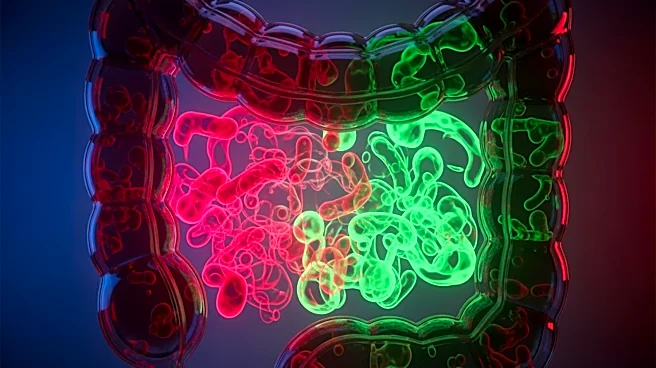
A study led by Vanderbilt University Medical Center has discovered how the bacterium Enterotoxigenic Bacteroides fragilis (ETBF) manipulates the gut environment to support its colonization and disease progression. The bacterium uses its toxin to reprogram
intestinal cell metabolism, increasing levels of lactate and oxygen, which facilitate its growth. This process not only aids ETBF's survival but also contributes to inflammatory diseases like colitis and colorectal cancer. The findings suggest new therapeutic strategies targeting these metabolic interactions to prevent or disrupt diseases.
Why It's Important?
Understanding how ETBF alters the gut environment provides critical insights into the mechanisms of gut-related diseases. This knowledge could lead to the development of targeted therapies that disrupt the bacterium's ability to thrive, potentially reducing the incidence of related inflammatory diseases and colorectal cancer. The study highlights the complex interactions between pathogens and host metabolism, emphasizing the need for innovative approaches in treating microbial infections. It also underscores the importance of gut health in overall disease prevention and management.
What's Next?
Researchers will continue to explore how ETBF and similar pathogens exploit the gut environment, aiming to identify broader applications of these findings across different diseases. Future studies may focus on developing drugs that specifically target the metabolic pathways manipulated by ETBF, offering new treatment options. Additionally, understanding these interactions could inform public health strategies to mitigate the spread of such pathogens, potentially leading to improved gut health and reduced disease burden.