









What's Happening?
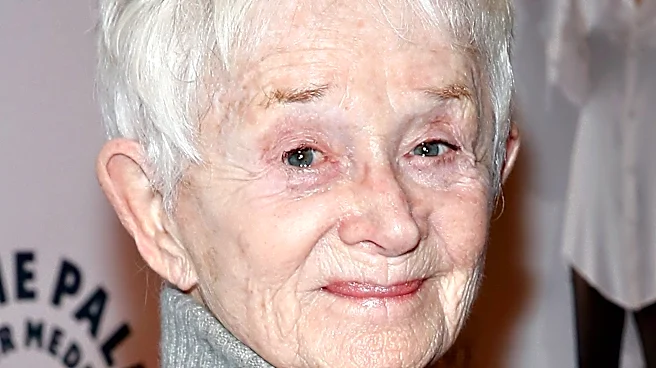
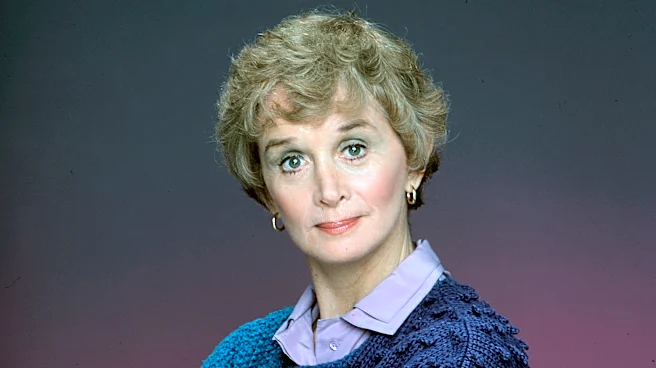
Barbara Barrie, an Oscar-nominated actress, passed away on Wednesday, October 28, at the age of 95 in her New York City home. Her daughter, Jane Harnick, confirmed that Barrie's passing was medically assisted following a diagnosis of terminal cancer.
This recent diagnosis came 12 years after she was initially diagnosed with idiopathic pulmonary fibrosis, a degenerative lung disease that severely impairs breathing. Barrie was recognized for her role in the 1979 film 'Breaking Away,' which earned her an Oscar nomination. She also originated the role of Sarah in the Broadway production of Stephen Sondheim's 'Company,' for which she received a Tony nomination. Her extensive career included appearances in the movie 'One Potato, Two Potato' and a notable role in the 1970s TV series 'Barney Miller.' In her later years, Barrie continued to perform, appearing on Broadway in 'Significant Other' in 2017 and making her final TV guest appearances in 'Nurse Jackie' (2010) and 'Enlightened' (2011). She is survived by her two children, shared with her late husband Jay Harnick, and three grandchildren.
Why It's Important?
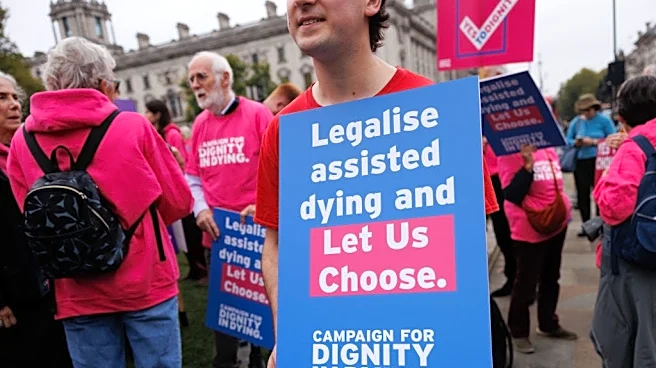
The passing of Barbara Barrie, particularly through medically assisted death, highlights the growing discussion and legal landscape surrounding end-of-life choices in the United States. Her decision, following a terminal cancer diagnosis and a long battle with a degenerative lung disease, brings attention to the personal autonomy individuals seek in managing their final moments. As more states consider or legalize medically assisted death, Barrie's case adds to the public discourse on the ethical, medical, and legal implications of such practices. Her legacy as a respected actress, combined with the circumstances of her death, may further influence public opinion and policy debates on the right to die with dignity. This event underscores the evolving societal views on death and dying, moving towards greater acceptance of individual control over end-of-life care, particularly for those facing terminal illnesses with significant suffering.
What's Next?
The news of Barbara Barrie's medically assisted death is likely to contribute to ongoing conversations about end-of-life care and the right-to-die movement in the U.S. As more individuals, particularly public figures, choose this path, it could lead to increased advocacy for broader access to medically assisted death in states where it is not yet legal. This may prompt legislative reviews and public health discussions on the criteria for eligibility, the role of medical professionals, and the safeguards necessary to protect vulnerable individuals. The legal and ethical frameworks surrounding medically assisted death are complex and continue to evolve, and high-profile cases like Barrie's often serve as catalysts for further examination and potential policy changes. Her passing may also encourage more open dialogue within families and communities about advance care planning and personal preferences for end-of-life decisions.
Beyond the Headlines
Barbara Barrie's decision to pursue medically assisted death, after a prolonged struggle with a debilitating illness, delves into profound questions about quality of life, personal agency, and the definition of a 'good death.' Beyond the legal and medical aspects, her choice reflects a cultural shift towards greater transparency and acceptance of death as a part of life, rather than a taboo subject. It challenges traditional views on suffering and highlights the importance of individual dignity in the face of terminal conditions. Her story may resonate with many who are grappling with similar health challenges, offering a sense of validation for those who wish to maintain control over their final moments. This development contributes to a broader societal conversation about how we care for the dying, the role of compassion in medicine, and the evolving understanding of human rights at the end of life.